
Last updated September 10, 2026
Level 1 sweep and inspection to the NFPA 211 annual standard - flue, crown, cap, and flashing checked and photographed
Chimney sweep logs do not sweep chimneys. They loosen some creosote - which then falls where a brush and vacuum still have to collect it.
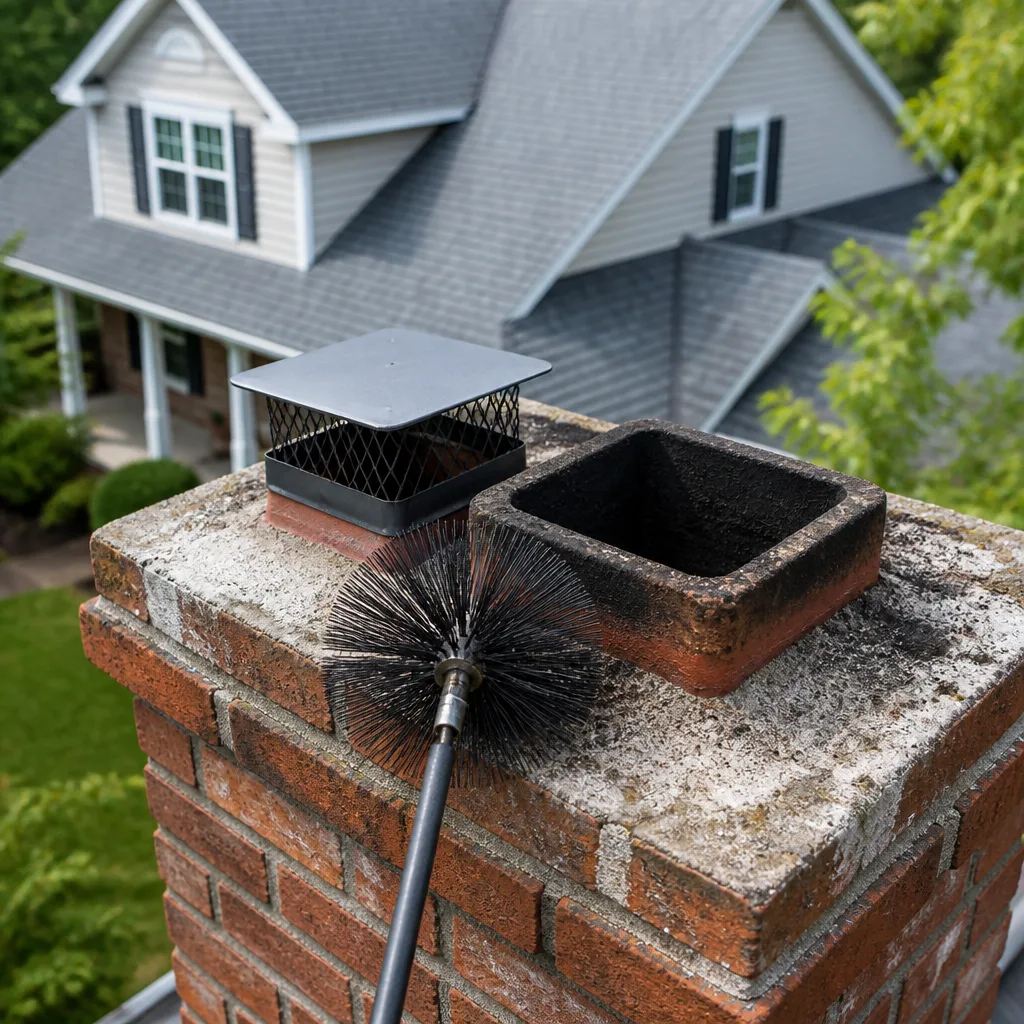
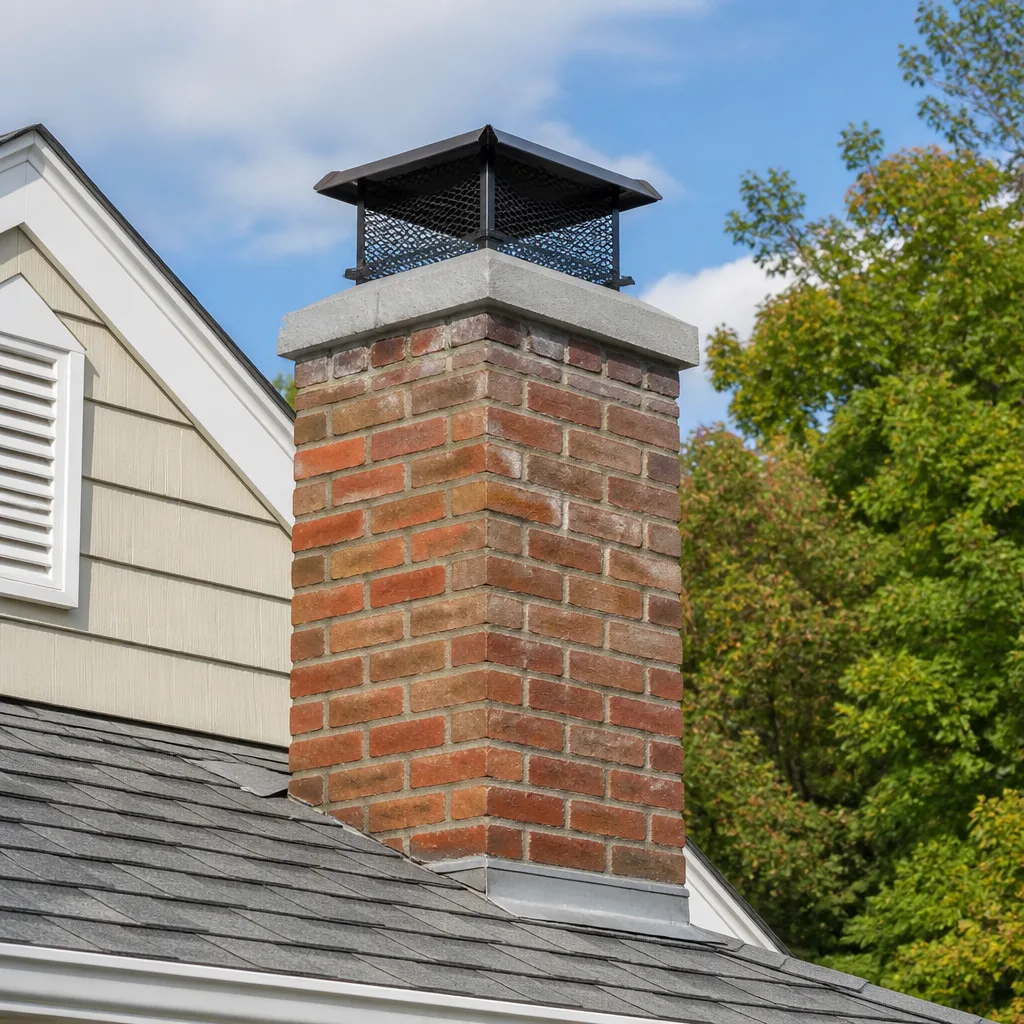
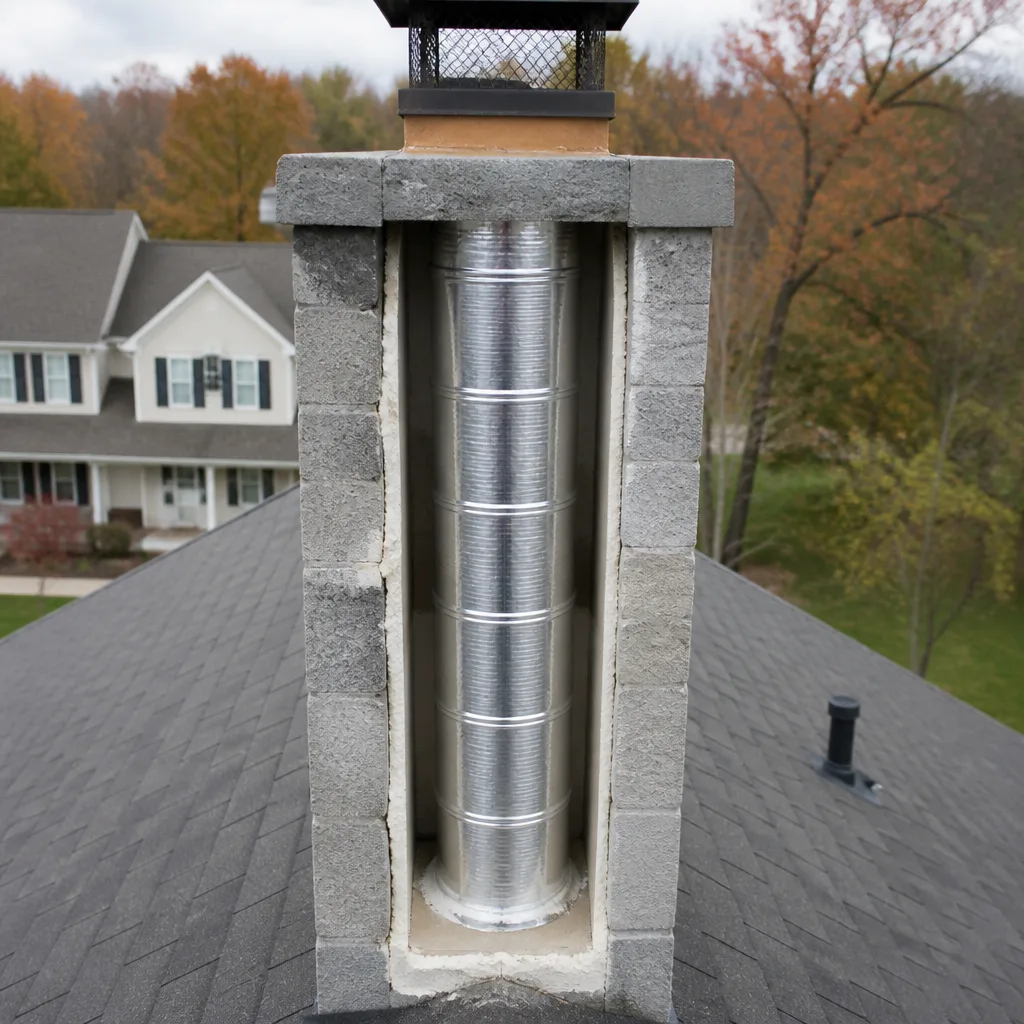
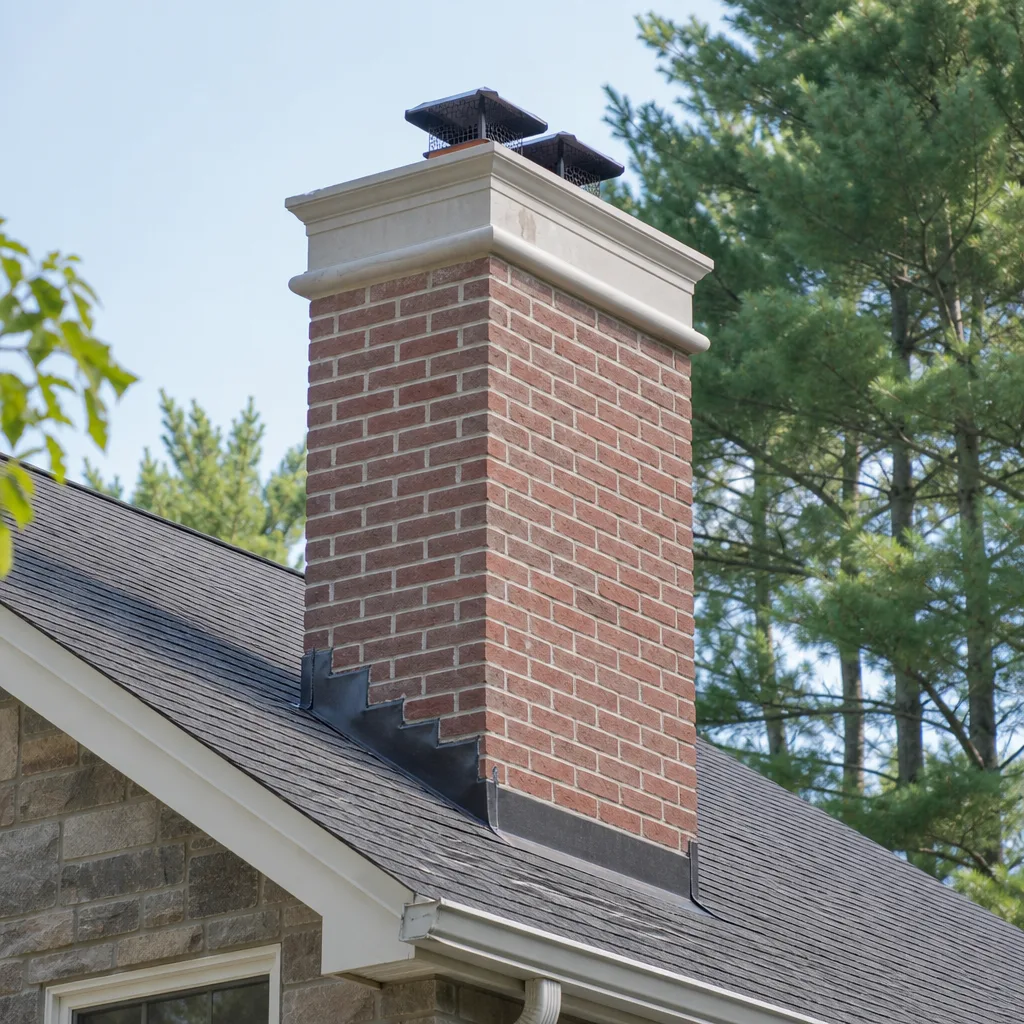
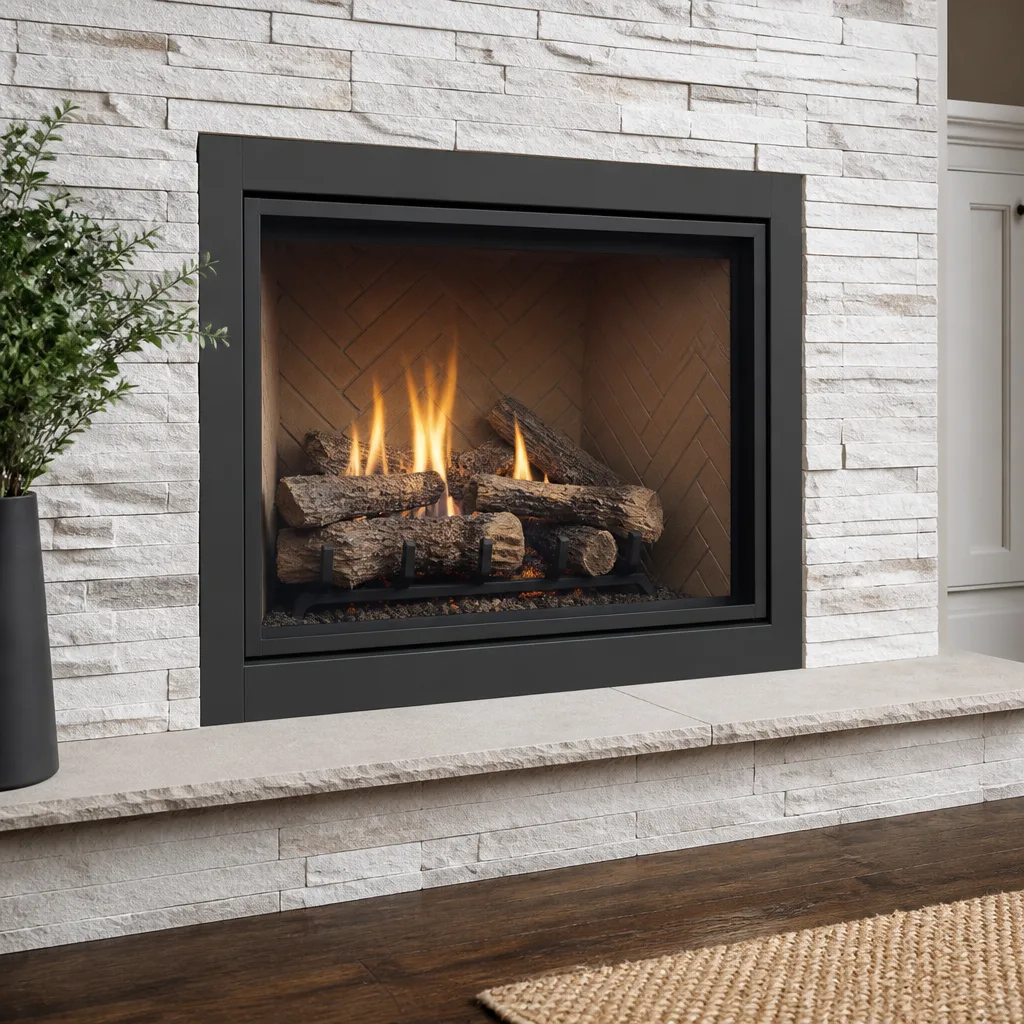
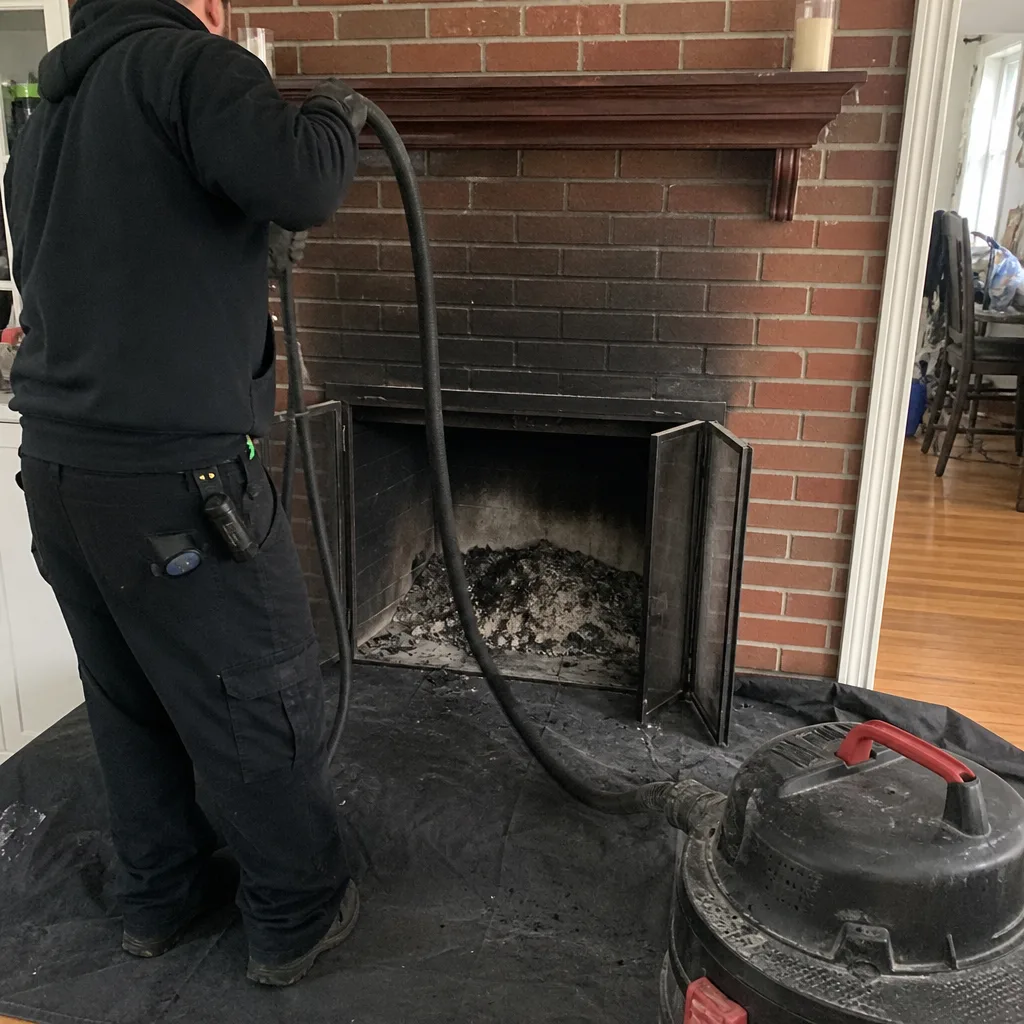 Before
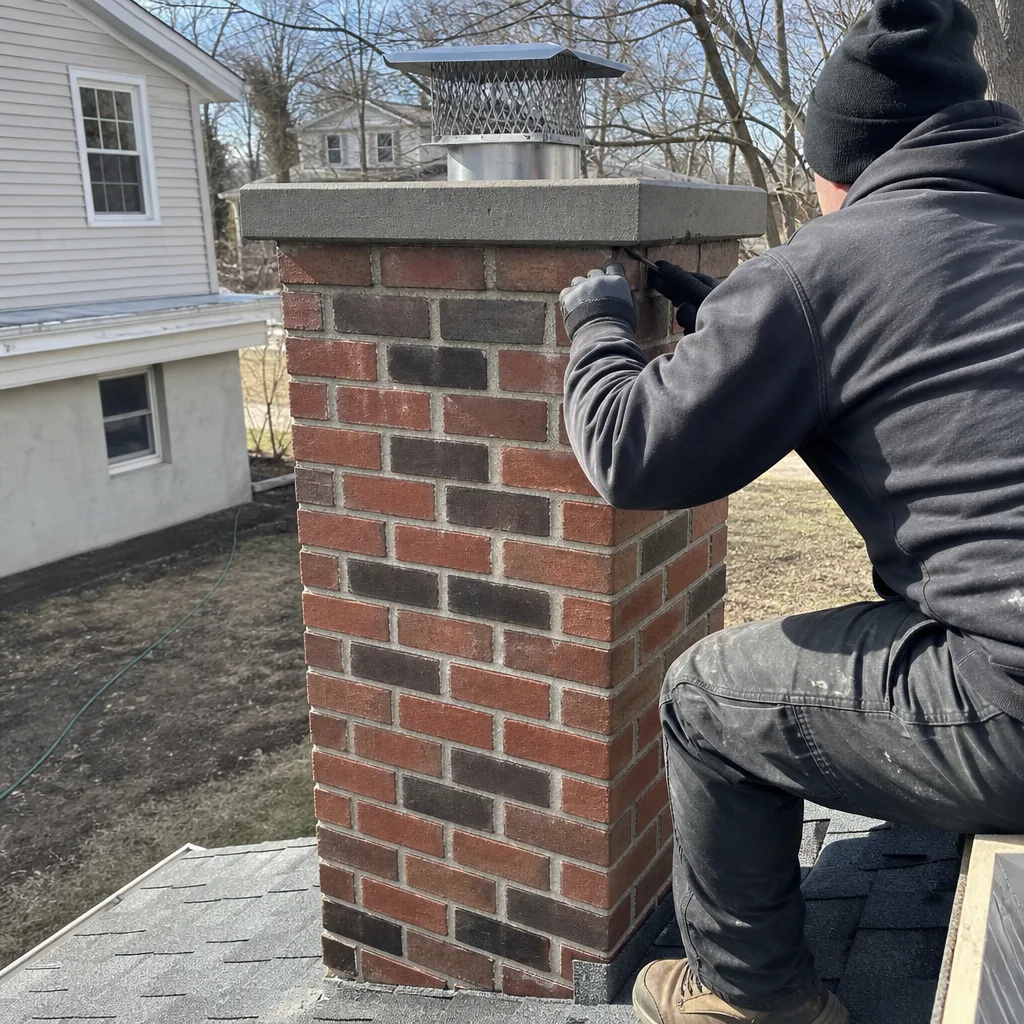 After
After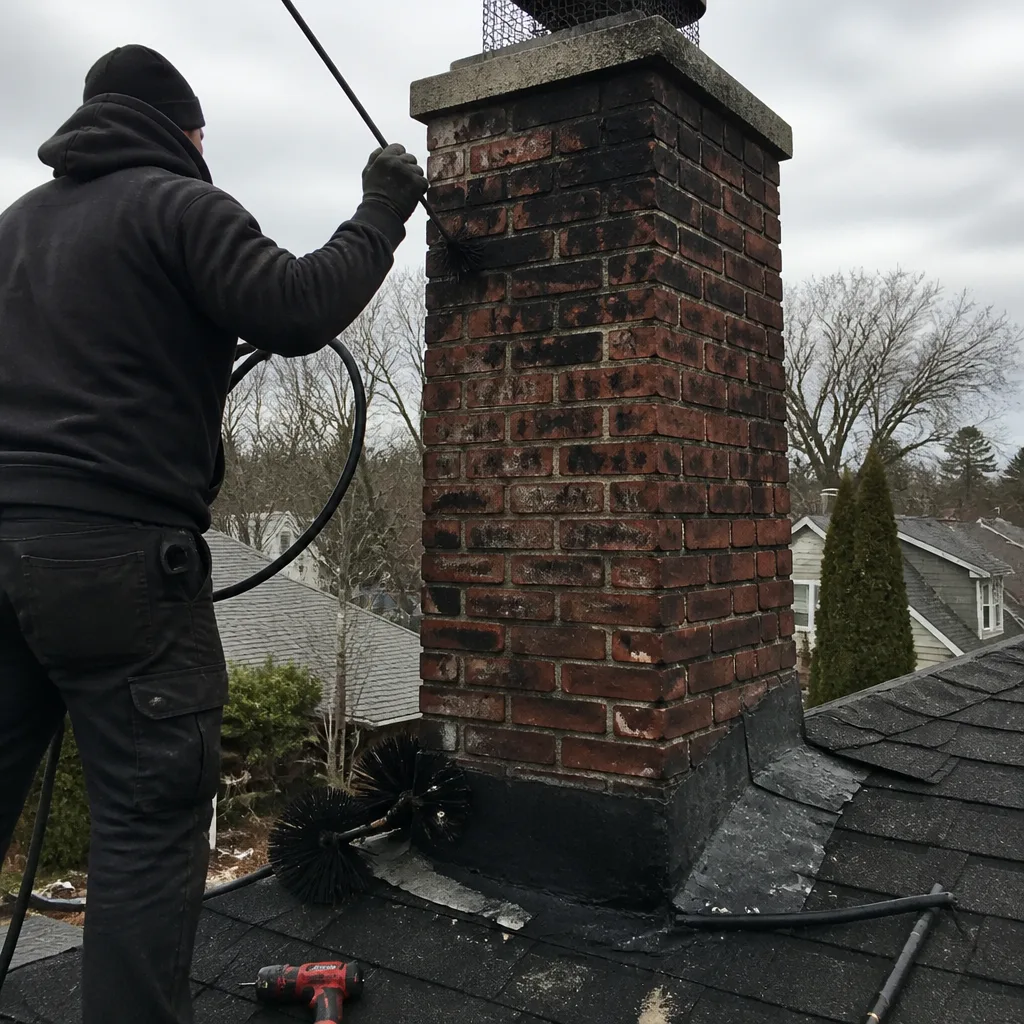 Before
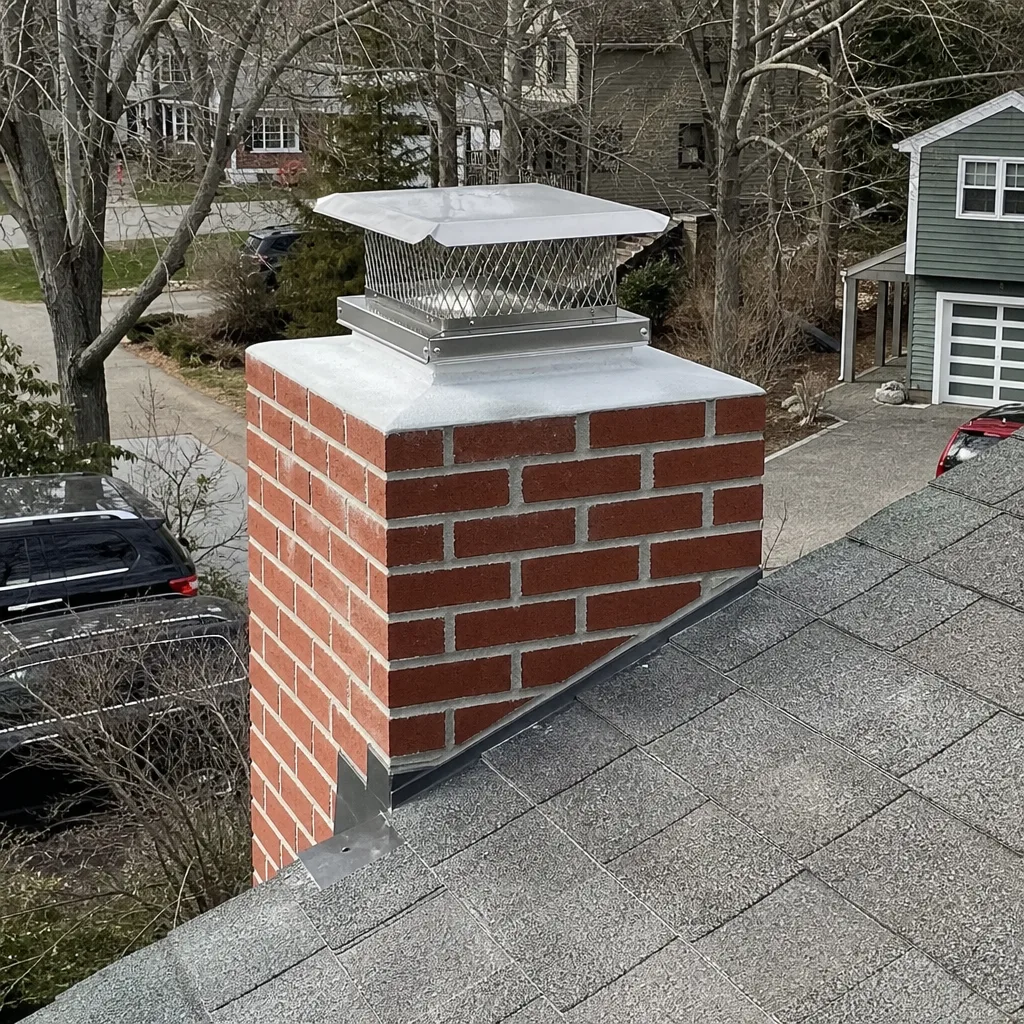 After
After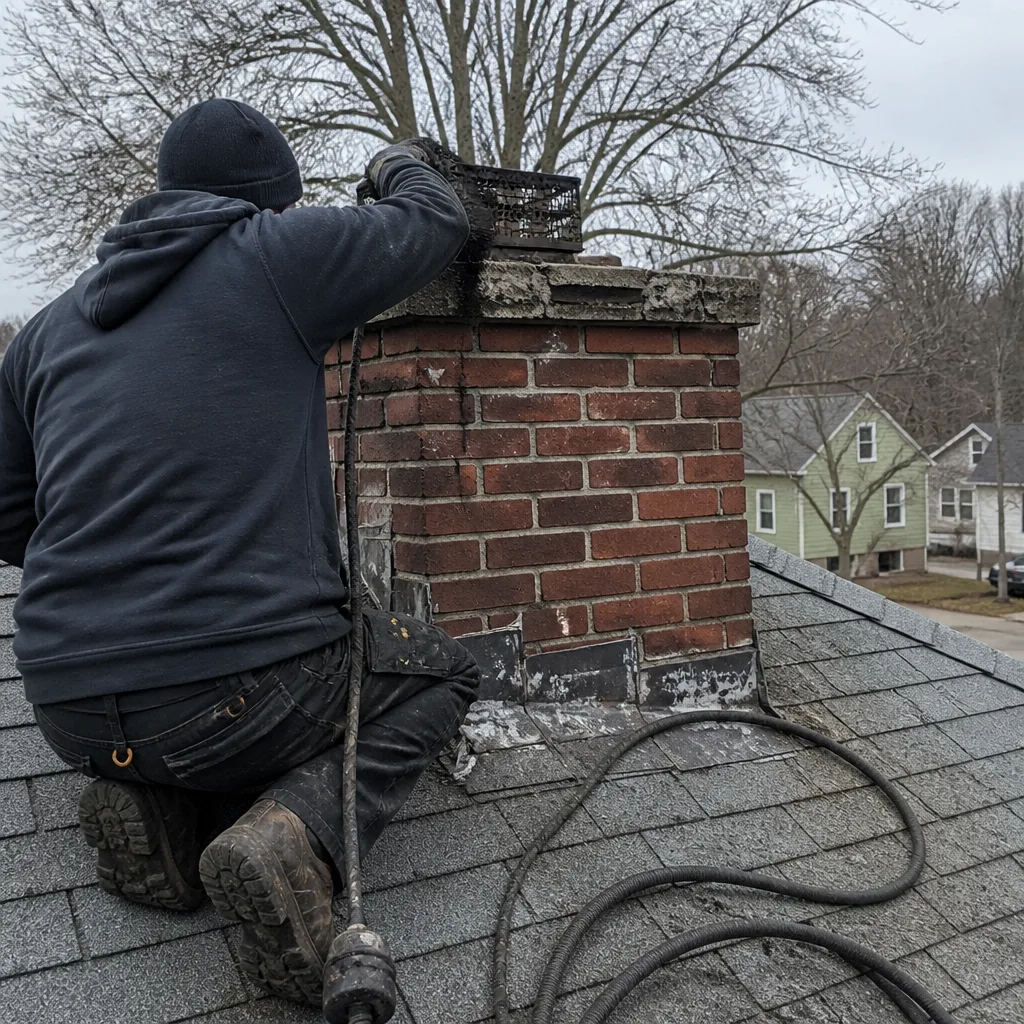 Before
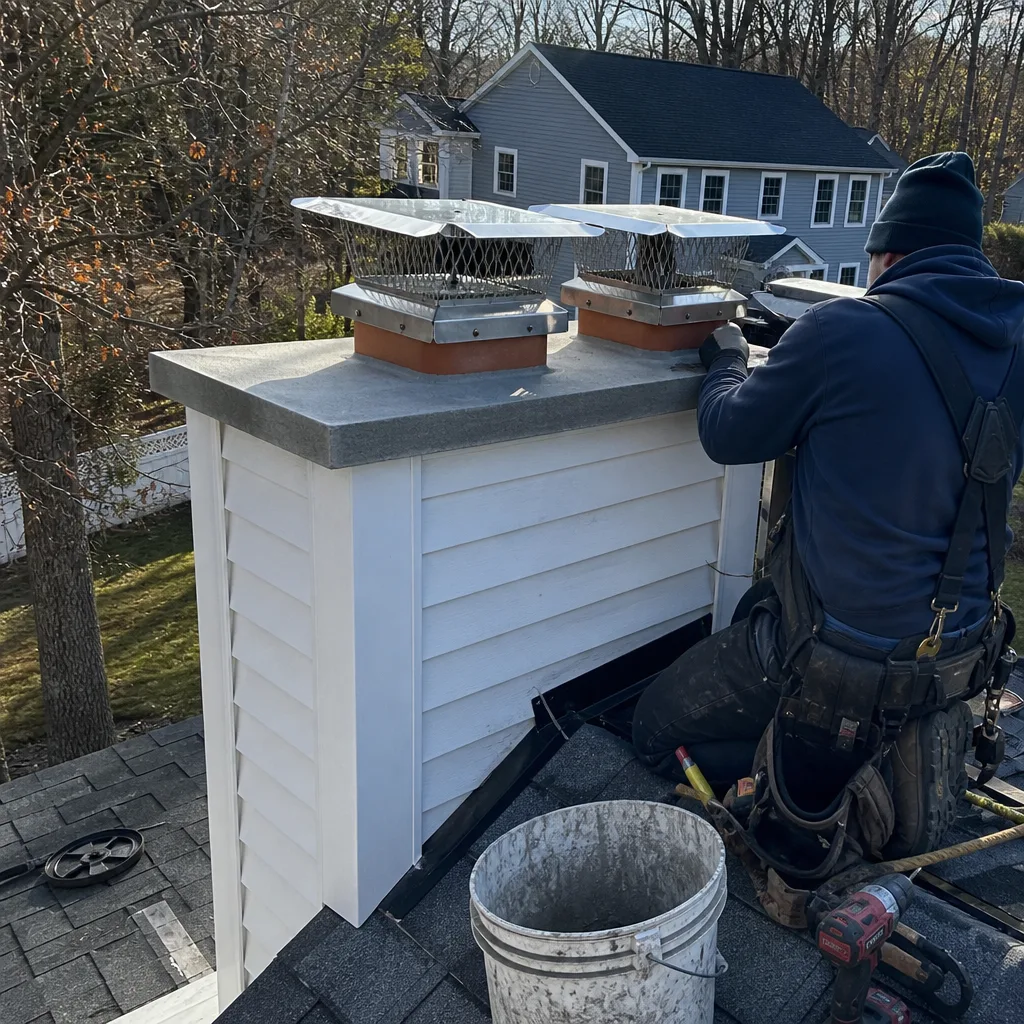 After
AfterThe Complete Guide to Chimney Cleaning in Wakefield
The NFPA reports that 30% of home heating fires are caused by creosote buildup - but the more telling stat is that most of those chimneys had been “cleaned” within the past two years. The cleaning happened; the right cleaning didn’t. In Wakefield, where winter temperatures swing from single digits to rain-soaked thaws and back again, a chimney faces stresses that a quick brush-and-vacuum simply doesn’t address. This guide - alongside our more guides & resources - explains what chimney cleaning actually means for your specific setup: how Wakefield’s climate, your fuel type, and your chimney’s age combine to determine whether it’s truly safe to light that first fire. You’ll learn why documentation matters more than the sweep itself, why the freeze-thaw cycle here cracks liners faster than inland Massachusetts, and why the wood you burn changes everything about how often you need us.
Quick Answer
Chimney cleaning in Wakefield costs between $189 and $349 for a standard sweep with Level-1 inspection, and should be done annually for wood-burning systems and every two to three years for gas. A proper cleaning includes photo documentation of the flue interior, removal of all three creosote grades, and a written condition report - not just a vacuum and a handshake. For most Wakefield homes built before 1990, cleaning is also the right moment to catch liner damage from our region’s aggressive freeze-thaw cycles - something we cover in detail in our Seasonal Chimney Cleaning Care for Wakefield: Year-Round Homeowner’s Guide.
Table of Contents
- How Often Should a Chimney Be Cleaned in Wakefield?
- What Chimney Cleaning Costs in Wakefield
- The Three Grades of Creosote (and Why Only One Responds to a Standard Brush)
- How Wakefield’s Freeze-Thaw Cycle Cracks Liners - and Why Cleaning Is the Moment to Catch It
- How Local Wood Species Affect Creosote Formation
- Why an Unused Chimney Still Needs Cleaning Before First Fire
- What a Photo-Documented Inspection Report Should Actually Include
- What Homeowners Can Check vs. What Requires a Pro
How Often Should a Chimney Be Cleaned in Wakefield?
Annual sweeping is the baseline for any wood-burning fireplace or stove in Wakefield, per NFPA 211. Gas systems can stretch to every two to three years, though we still recommend annual inspection because bird nests, moisture damage, and deteriorated flue caps don’t care what fuel you burn.
But “annual” is a rule of thumb that breaks down fast. Here’s what changes the math for Wakefield specifically:
- Older homes in Montrose or Wakefield Center with unlined brick chimneys often need mid-season checks. The porous terra-cotta flue tiles in pre-1960 construction absorb moisture during our wet springs, then crack when January drops to 8 degrees. Creosote hides in those cracks.
- Homes burning primarily oak or maple - the standard cordwood sold through Middlesex County - produce less creosote than softwoods but burn cooler if the wood isn’t fully seasoned. Cool fires create more Grade 2 and 3 creosote, which builds faster than you think.
- Supplemental heating use changes everything. A fireplace burned every weekend from October through March accumulates differently than one used only Christmas week. We see the difference in the Green Street neighborhood, where many homeowners now use wood stoves as primary heat.
- Previous chimney fires, even small ones, glaze the flue with Grade 3 creosote that standard brushing won’t touch. If your home’s history includes a chimney fire, assume you need more than a basic sweep until a camera proves otherwise.
The CSIA recommends inspection any time you change fuel type, appliance, or liner condition. In Wakefield’s market, where many 1970s and 1980s homes still have original stainless steel liners from the first oil-to-gas conversions, that “change” happened decades ago and the liner is now degrading invisibly.
Our schedule: we book sweeps from March through November, with September and October filling first. A chimney swept in spring sits clean through the humid summer, when moisture-driven odors develop in dirty flues. A chimney swept in late fall is already carrying last season’s buildup into the first fire.
What Chimney Cleaning Costs in Wakefield
Chimney cleaning in Wakefield runs $189 to $349 for a standard sweep with Level-1 inspection. What you pay depends on three factors: how accessible your flue is, what we find when we look inside, and whether you need documentation beyond a basic sweep report.
| Service | Price Range | What’s Included |
|---|---|---|
| Standard chimney sweep with Level-1 inspection | $189 - $249 | Brush and vacuum cleaning of flue, smoke chamber, and firebox; visual inspection from top and bottom; basic condition report |
| Sweep with Level-2 camera inspection | $279 - $349 | Everything in standard sweep plus full video scan of flue interior, photo documentation, written verdict with recommendations |
| Grade 3 creosote removal (glazed) | $150 - $400 additional | Chemical treatment and mechanical removal with specialized chains or rotary tools; may require return visit |
| Chimney cap or crown repair during visit | $180 - $650 | Installation of professional-grade cap or minor crown sealing with materials from Gelco or Copperfield |
We don’t quote by phone without seeing the chimney, and we don’t change the price after we arrive. The number on the estimate is the number on the invoice. That’s our policy, and it’s why we ask a few questions when you call: age of home, fuel type, last service date, any known issues. This lets us give you an accurate range, not a teaser that balloons on site.
The $89 Seasonal Tune-Up we offer covers basic inspection and light cleaning for gas systems in good condition. It’s not a substitute for a full sweep if you burn wood, but it’s a reasonable starting point if you’re unsure what you need.
Competitors in the Wakefield market sometimes advertise “$99 sweeps” that exclude the firebox, skip the smoke chamber, or don’t include a written report. We’ve been called in after those to find Grade 3 creosote still coating the flue and a homeowner who thought the job was done - exactly the risk we break down in our DIY vs Professional Chimney Cleaning: The Wakefield Homeowner’s Decision Guide. A square deal means no surprises on the bill - and no surprises in the flue.
The Three Grades of Creosote (and Why Only One Responds to a Standard Brush)
Creosote isn’t one substance. It’s three distinct forms, and treating them as the same is how chimneys get “cleaned” without being safe.
Grade 1: Sooty and flaky. This is what a standard wire brush removes. It looks like black dust or light flakes, brushes off easily, and indicates relatively hot, efficient burns with seasoned wood. If your chimney produces only Grade 1 creosote, annual sweeping with a brush and vacuum keeps you safe. Most Wakefield homeowners who burn kiln-dried hardwood and run their fires hot see primarily Grade 1.
Grade 2: Crunchy and porous. This looks like hardened tar bubbles or honeycomb. It forms when fires smolder, when wood isn’t fully seasoned, or when the flue is oversized for the appliance. Standard brushing won’t remove it. We need a rotary chain or whip system, sometimes with chemical pretreatment. Grade 2 is common in Wakefield’s older homes with oversized masonry flues originally built for coal or oil.
Grade 3: Glazed and glassy. This is chimney fire fuel. It’s black, shiny, and as hard as enamel. It forms after repeated low-temperature burns with unseasoned wood, or after a partial chimney fire has baked lighter creosote into a glaze. A standard brush slides right over it. Removing Grade 3 requires chemical treatment to soften the deposit, followed by mechanical removal with specialized equipment. Sometimes we need two visits. Sometimes we find it hiding behind Grade 1 that brushed off easily, which is exactly why camera inspection matters.
In our 42 years, we’ve learned that Wakefield’s wood supply is variable. Cordwood advertised as “seasoned” often isn’t - especially the green oak and maple cut from local properties and sold cheap through informal networks. That wood hits the fire at 30% moisture or higher, smolders instead of burning, and produces Grade 2 or 3 creosote within a single season.
Here’s how to tell what you might have before we arrive:
- Check your firebox walls. Heavy black, shiny buildup on the back wall suggests glazed creosote in the flue above.
- Smell your chimney on a humid day. A strong, sharp tar odor indicates active creosote, not old ash.
- Listen for a roaring or crackling sound in the flue during burns. That’s creosote igniting - a chimney fire in progress.
- Look at your glass doors if you have them. Heavy black staining that doesn’t wipe clean with newspaper suggests inefficient, creosote-producing burns.
If you suspect Grade 2 or 3, tell us when you call. We’ll schedule extra time and bring the right equipment. Done right - and we stand behind it.
How Wakefield’s Freeze-Thaw Cycle Cracks Liners - and Why Cleaning Is the Moment to Catch It
Wakefield sits in Essex County’s coastal climate zone, where winter brings something worse than cold alone: repeated freeze-thaw cycles. Rain or melting snow seeps into masonry joints and liner seams, then expands when temperatures drop below 32. That expansion forces cracks open wider. The next thaw brings more water. By March, a hairline crack from November is a structural gap.
We’ve documented this pattern across Wakefield’s neighborhoods. In the Greenwood section, where many homes date to the 1920s and 1930s, we regularly find terra-cotta flue tiles with spalled faces - the surface layer flaked off by freeze-thaw stress. In newer developments near Lake Quannapowitt, 1980s and 1990s homes with original stainless steel liners show seam separation at the joints, where condensation collects and freezes.
The critical insight: you don’t need a separate “inspection” to find this. The moment we’re inside your flue with a brush and a camera is the moment we see it. Separating cleaning and inspection into two appointments, or skipping the camera entirely, means cracked liners go undetected until they’re leaking carbon monoxide into wall cavities or dumping creosote into hidden spaces.
Here’s what the freeze-thaw cycle specifically damages, and what we look for during a cleaning:
- Terra-cotta flue tiles: Vertical cracks, spalling (surface flaking), and shifted segments. These are common in Wakefield Center and Montrose pre-war construction.
- Stainless steel liners: Seam separation, corrosion at condensation points, and dislodged connectors. We see this in 1970s-1990s homes that converted from oil to gas without updating liner sizing.
- Mortar joints between tiles: Erosion and voids that let gases escape into the chimney structure. This is invisible from the firebox and often missed without a camera.
- Crown concrete: Cracks that channel water directly into the flue system. A damaged crown accelerates everything else.
When we find liner damage during cleaning, we photograph it, explain what it means for your specific heating system, and give you a plain-English verdict. Some cracks need immediate repair. Some can be monitored annually. Some are cosmetic. The difference matters, and we don’t recommend work without evidence you can see for yourself.
Our chimney repair in Wakefield services include liner replacement with DuraFlex stainless steel systems and crown rebuilding with professional-grade materials. But we only discuss repair after documentation, never before.
How Local Wood Species Affect Creosote Formation
The wood you burn in Wakefield is not the wood burned in Georgia or Oregon, and creosote formation rates vary dramatically by species, moisture content, and how the wood was stored.
Here’s what moves through local cordwood markets:
| Wood Type | Typical Source | BTU Content (per cord) | Creosote Tendency | Notes for Wakefield Burners |
|---|---|---|---|---|
| White Oak | Middlesex County hardwood lots | 26.4 million | Low (when seasoned) | High density means hot burns and complete combustion. But unseasoned oak smolders badly - we see this with “seasoned” cordwood that’s been split for six months, not twelve. |
| Sugar Maple | Local sugarbush thinnings, storm drops | 24.0 million | Low to moderate | Burns steady and hot. Often mixed with oak in local cords. Watch for bark-heavy pieces from storm damage - bark carries more moisture. |
| Birch | North Shore lots, often from landscaping removals | 20.3 million | Moderate | Burns fast and bright, tempting owners to damp down the fire. Damped birch = cool fire = creosote. |
| Pine / Spruce | Christmas tree farms, construction scrap | 15.0 - 17.0 million | High | Softwoods burn fast and resinous. The resin itself doesn’t create more creosote, but the fast burn tempts cooler operation. Never burn painted or treated lumber. |
The green cordwood problem deserves special attention. Every year we meet Wakefield homeowners who bought “seasoned” wood from a neighbor’s tree service, split last spring, burned this fall. At 30-40% moisture content, that wood wastes half its energy boiling water instead of producing heat. The fire smolders. The flue stays cool. Grade 2 and 3 creosote forms in weeks, not months.
Properly seasoned wood reads below 20% moisture on a split face with a meter. It cracks at the ends. It sounds hollow when knocked. It weighs noticeably less than fresh-cut. If your cord doesn’t match this description, assume you’re building creosote faster than annual sweeping can manage.
We don’t sell wood and we don’t inspect your cord stack. But when we find heavy creosote in a Wakefield chimney, we ask what you’re burning. The answer usually explains the problem.
Why an Unused Chimney Still Needs Cleaning Before First Fire
This is the mistake we see most often, and it’s the most dangerous: “We haven’t used the fireplace in two years, so it should be fine.”
An unused chimney is not a clean chimney. In Wakefield’s climate, it’s often a worse chimney than one used regularly.
Here’s what happens when a chimney sits idle:
- Moisture accumulates. Without regular hot drafts to dry the flue, condensation from humid summers and fall rains soaks into creosote residue. Wet creosote is acidic. It corrodes metal liners and eats at mortar joints.
- Animals move in. Chimneys without caps - and many in Wakefield lack them, especially in neighborhoods with mature trees that drop debris - become nesting sites for squirrels, raccoons, and chimney swifts. Nests block airflow and ignite easily. We’ve pulled full squirrel leaf nests from flues in April that would have torched on the first fall fire.
- Structural damage progresses unseen. That hairline crack from the 2022 freeze-thaw cycle widened through two idle winters. Without a fire to draw gases upward, there’s no pressure test of the flue’s integrity. The first fire becomes the test, and failure means carbon monoxide in the living space or a house fire.
- Old creosote hardens. Grade 1 creosote left undisturbed for two years can harden to Grade 2. The passage of time doesn’t clean the chimney; it bakes the residue in place.
The right sequence is: inspect and clean before the first fire, not after. A chimney that hasn’t been used in a season or more needs Level-2 camera inspection, not assumption. We’ve documented cases in Wakefield’s North Avenue corridor where homeowners lit first fires in November, smelled smoke in the house, and discovered blocked flues or cracked liners that a pre-season sweep would have caught.
Our fireplace services in Wakefield include pre-season inspection and cleaning for systems of any age or use history. The $89 Seasonal Tune-Up applies to gas systems; wood systems need full evaluation.
What a Photo-Documented Inspection Report Should Actually Include
Most chimney sweeps hand you a carbon-copy checklist, or nothing at all. A proper report documents what was found, where it was found, and what it means for your safety. Here’s what we deliver after every Level-2 inspection, and what you should demand from any sweep:
1. Pre-cleaning photos of the flue interior
These show creosote grade, liner condition, and any obstructions before we touch anything. They establish baseline condition and prove what was there.
2. Post-cleaning photos of the same sections
These prove the flue is actually clean, not just brushed at the top. We photograph from the firebox looking up and from the roof looking down, matching angles.
3. Close-ups of any damage or concern
Cracks, spalling, corrosion, missing mortar - each gets a dedicated photo with location noted. In Wakefield’s older homes, we typically document 2-4 concern points per inspection.
4. Written verdict in plain English
No “recommend evaluation by qualified professional” vagueness. We state: “The liner has a 4-inch vertical crack at 8 feet above the firebox. This allows exhaust gases to enter the chimney structure. Repair options are…”
5. Prioritized recommendations with timelines
We label each finding: Immediate (unsafe to use), Short-term (address this season), Monitor (check annually). You decide what to do and when, with clear information.
6. Documentation of materials and methods
If we used HeatShield for crown repair or DuraFlex liner components, it’s noted. This matters for warranty transfer if you sell, and for our own 90-Day Done Right Promise.
The report is yours to keep, share with your home inspector, or provide to the next buyer. We’ve had Wakefield homeowners use our reports to negotiate repairs before closing, or to demonstrate due diligence to their insurance company after a claim.
A sweep without documentation is a sweep you can’t verify. Photos you can see, a plain-English verdict. That’s our standard.
What Homeowners Can Check vs. What Requires a Pro
There are things you should look at, and things you should never touch. The distinction matters for safety and for your warranty.
Safe homeowner checks:
- Visual inspection of the firebox for cracks, missing mortar, or rust stains that indicate water entry
- Checking that the damper opens fully and closes snugly
- Looking up the flue from the firebox with a flashlight for obvious blockages or heavy buildup
- Inspecting the chimney crown and cap from ground level with binoculars for cracks or missing pieces
- Testing smoke alarms and carbon monoxide detectors monthly
Never DIY - call a professional:
- Any work on the roof, including cap removal or crown inspection. Wakefield’s colonial and cape roofs are steep, and fall injuries are common.
- Attempting to clean the flue with household tools. Standard shop vacuums lack HEPA filtration for fine creosote particles and can spread combustible dust through your home.
- Removing animal nests. Raccoons and squirrels bite; chimney swifts are federally protected during nesting season.
- Evaluating liner condition. You cannot see most liner damage from the firebox without specialized equipment.
- Repairing cracks with consumer-grade sealants. HeatShield and similar professional products require specific application training; hardware store “chimney repair” caulk fails within months.
Carbon monoxide and chimney fires are genuine hazards. The NFPA’s 30% figure is not abstract - it’s Wakefield neighbors, people who thought their chimney was fine because they couldn’t see a problem. We’re state-licensed, insured and bonded, and our technicians are background-checked and uniformed. Most jobs complete in a single visit. We’ll be there when we say.
Common Mistakes to Avoid
- Hiring based on price alone. The $99 sweep that skips the smoke chamber, omits the camera, and hands you a blank invoice is not a deal. It’s a deferred problem. In Wakefield’s competitive market, we’ve rebuilt after too many of these.
- Assuming gas chimneys don’t need attention. Gas produces less creosote but more moisture in the flue. That moisture corrodes liners and degrades mortar. We find damaged gas flues in Wakefield’s 1980s subdivisions regularly.
- Burning “seasoned” wood that isn’t. Six months of air-drying is not enough for dense hardwoods. Buy a moisture meter. Use it. Your flue depends on it.
- Waiting for symptoms. Smoke in the room, a roaring flue, or a tar smell are not early warnings. They’re late warnings. By the time you notice, damage has occurred.
- Ignoring the crown and cap. Water is a chimney’s enemy, and Wakefield’s rain-snow-freeze cycle is relentless. A $200 cap prevents $2,000 in liner damage. We install Gelco and Copperfield caps that outlast the hardware store versions by a decade.
- Skipping inspection after a chimney fire. Even a small, self-extinguished fire cracks liners and creates glazed creosote. The chimney may look fine and be structurally compromised. Always inspect after any suspected fire.
When to Call a Professional
Call us when you haven’t had service in over a year, when you’re buying or selling a home, when you’ve changed fuel types or appliances, or when you notice any change in performance - smoke, odor, draft issues, or unusual sounds. Call immediately if you suspect a chimney fire has occurred, even if it went out on its own.
In Wakefield, where heating season runs October through April and our freeze-thaw cycle punishes masonry systems, preventive maintenance isn’t cautious - it’s economical. A swept, inspected, documented chimney costs less than emergency repair, and far less than a house fire.
Hearthstone Chimney Co. offers free estimates in Wakefield. Call (857) 364-8219. A live person answers, 24 hours a day, every day. We’ll schedule a time that works, show up when we say, and leave you with photos you can see and a plain-English verdict. In writing, no arguing.
Frequently Asked Questions
A standard chimney sweep with Level-1 inspection in Wakefield costs between $189 and $249. Adding a Level-2 camera inspection, which we recommend for homes over 30 years old or any system with unknown history, runs $279 to $349. Heavy creosote removal or repairs are additional, quoted upfront before work begins. Call (857) 364-8219 for an exact quote - estimates are free.
You need a new liner if the existing one is cracked, corroded, improperly sized for your appliance, or missing entirely. We don’t recommend liner replacement without camera evidence you can see. Many Wakefield chimneys with terra-cotta flue tiles have localized damage that can be repaired; others need full DuraFlex stainless steel replacement. The only way to know is inspection, not assumption. If another company quoted liner work without showing you photos, get a free second opinion from us.
Wood-burning systems need annual sweeping. Gas systems need inspection every two to three years, with cleaning as needed. Homes in Wakefield’s older neighborhoods with unlined chimneys, or any home burning primarily oak or maple that may not be fully seasoned, should consider more frequent checks. The freeze-thaw cycle here accelerates liner damage, making annual inspection a practical minimum.
Skipped cleaning leads to creosote accumulation, which restricts airflow and creates chimney fire fuel. In Wakefield’s climate, moisture also degrades liners and mortar between fires. The result is higher risk of fire, carbon monoxide leakage into living spaces, and more expensive repairs when problems are finally discovered. A skipped $250 sweep becomes a $2,500 liner replacement or worse.
You can check visible areas from the firebox and maintain your firebox interior, but flue cleaning requires proper equipment and training. The risk of roof falls, improper creosote removal, and undetected liner damage outweighs any savings. In our experience, DIY cleaning misses Grade 2 and 3 creosote more often than not. We’re state-licensed and insured for this work - use the professionals.
If any work we perform isn’t right, we come back and make it right - in writing, with no paperwork and no arguing. The promise covers all our services and is governed by our K.E.Y.S. values: Krafted right, Every time, Your home first, Standing behind it. We’ve honored this promise for over 42 years, and we plan to be in Wakefield to honor it for decades more.
The Bottom Line
Chimney cleaning in Wakefield is not a single event - it’s a system that matches your fuel, your home’s age, and our local climate to a documented standard of safety. The right cleaning removes all three creosote grades, inspects for freeze-thaw damage specific to Essex County, and leaves you with photos and a written verdict you can understand. Anything less leaves risk you can’t see.
We’ve served local communities for over 42 years. We’re not a chain, not a one-truck operator with a voicemail box. We’re craftsmen who document our work, stand behind it in writing, and plan to be here when you need us next. That’s the Hearthstone Chimney Co. home difference, and it’s why Wakefield homeowners call (857) 364-8219.
Written by Russell Haines, Owner at Hearthstone Chimney Co., serving Wakefield since 2014.