
Last updated September 10, 2026
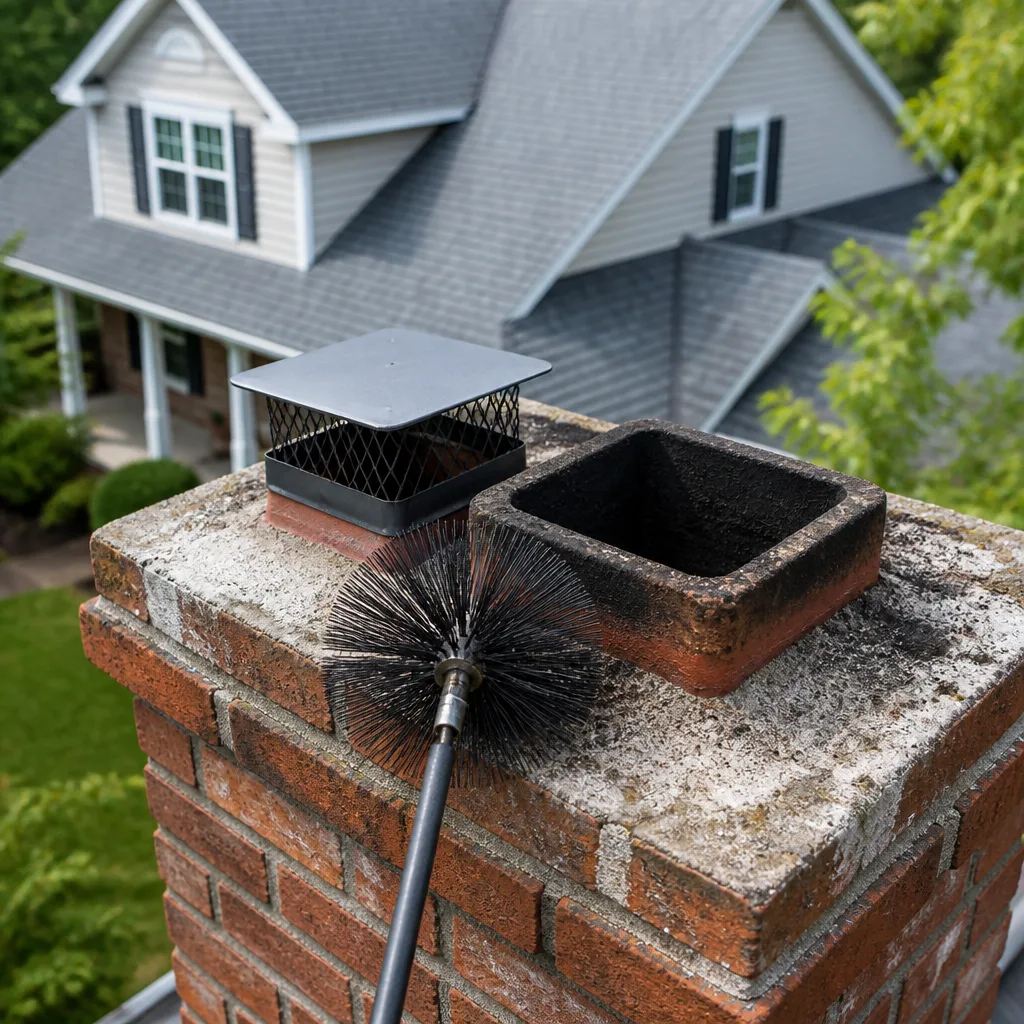
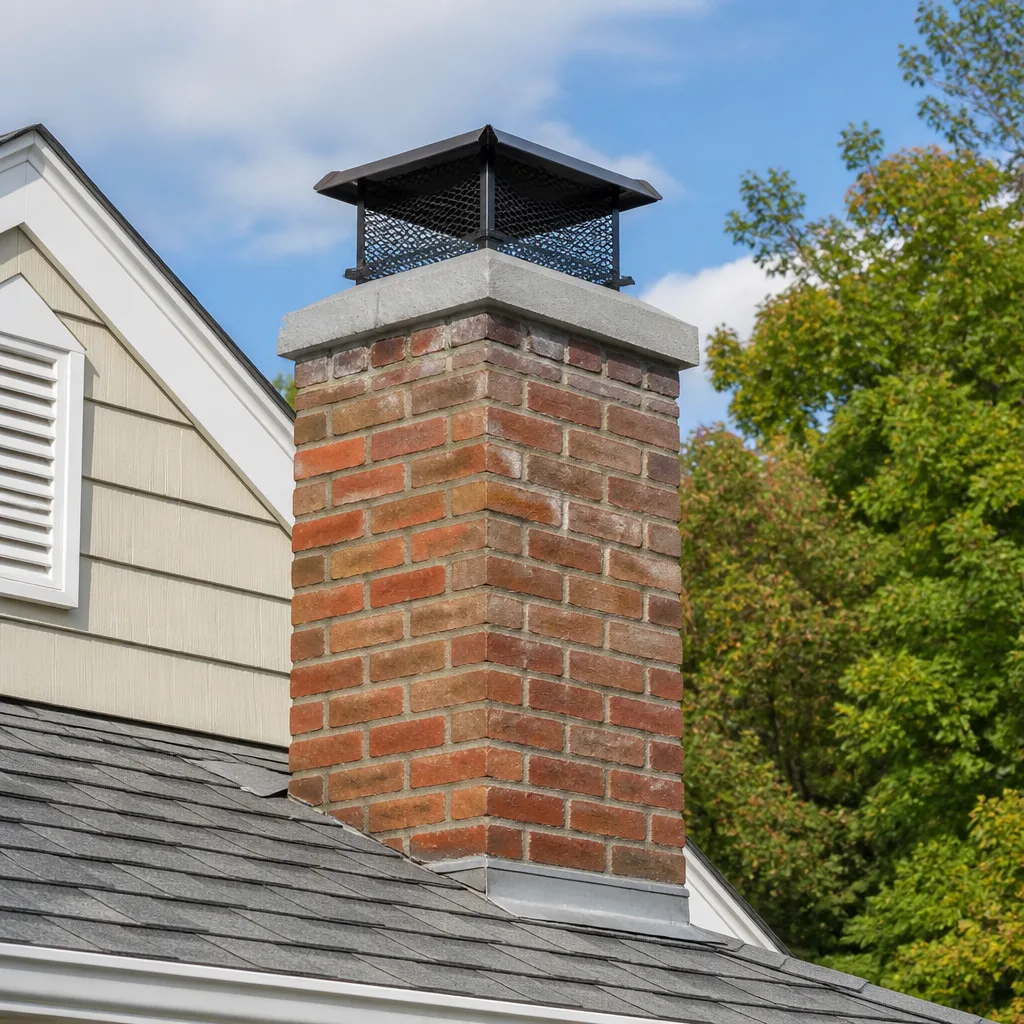
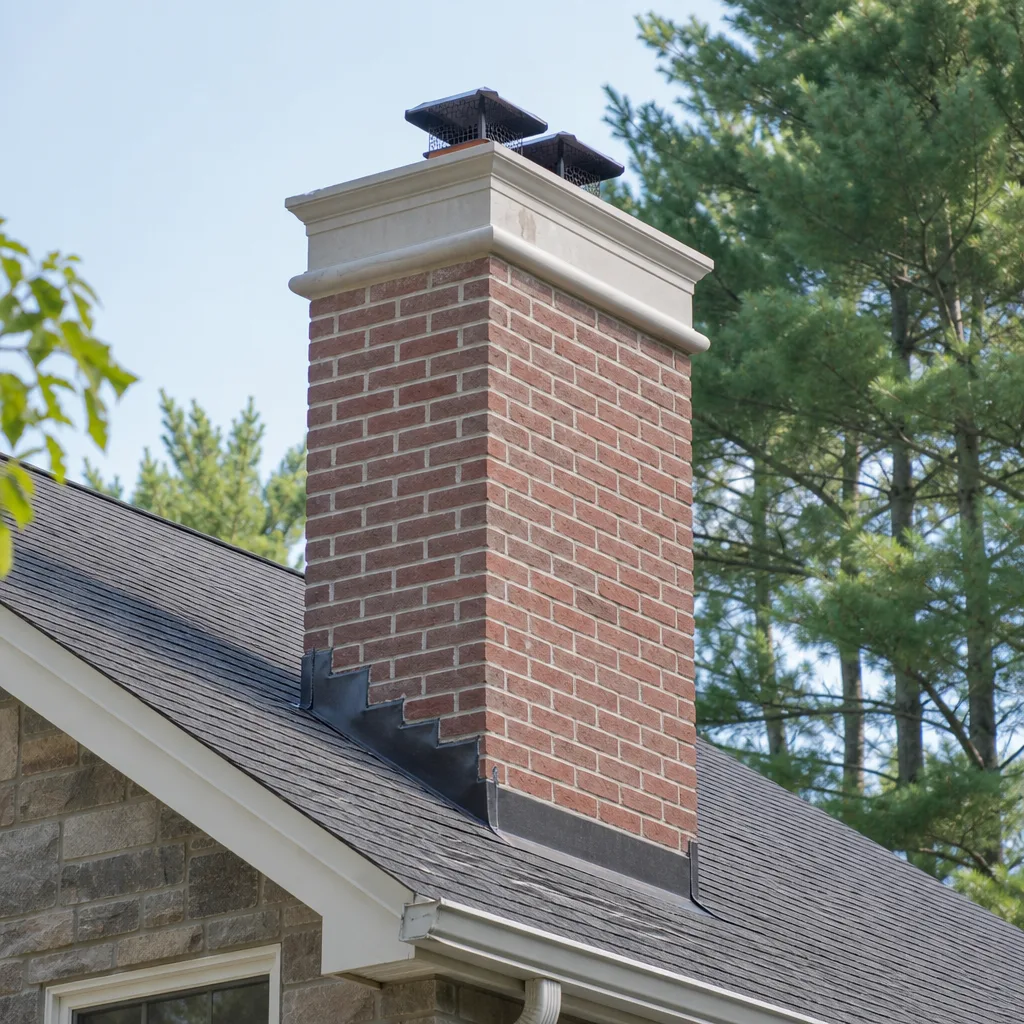
Level 1 sweep and inspection to the NFPA 211 annual standard - flue, crown, cap, and flashing checked and photographed
Chimney sweep logs do not sweep chimneys. They loosen some creosote - which then falls where a brush and vacuum still have to collect it.
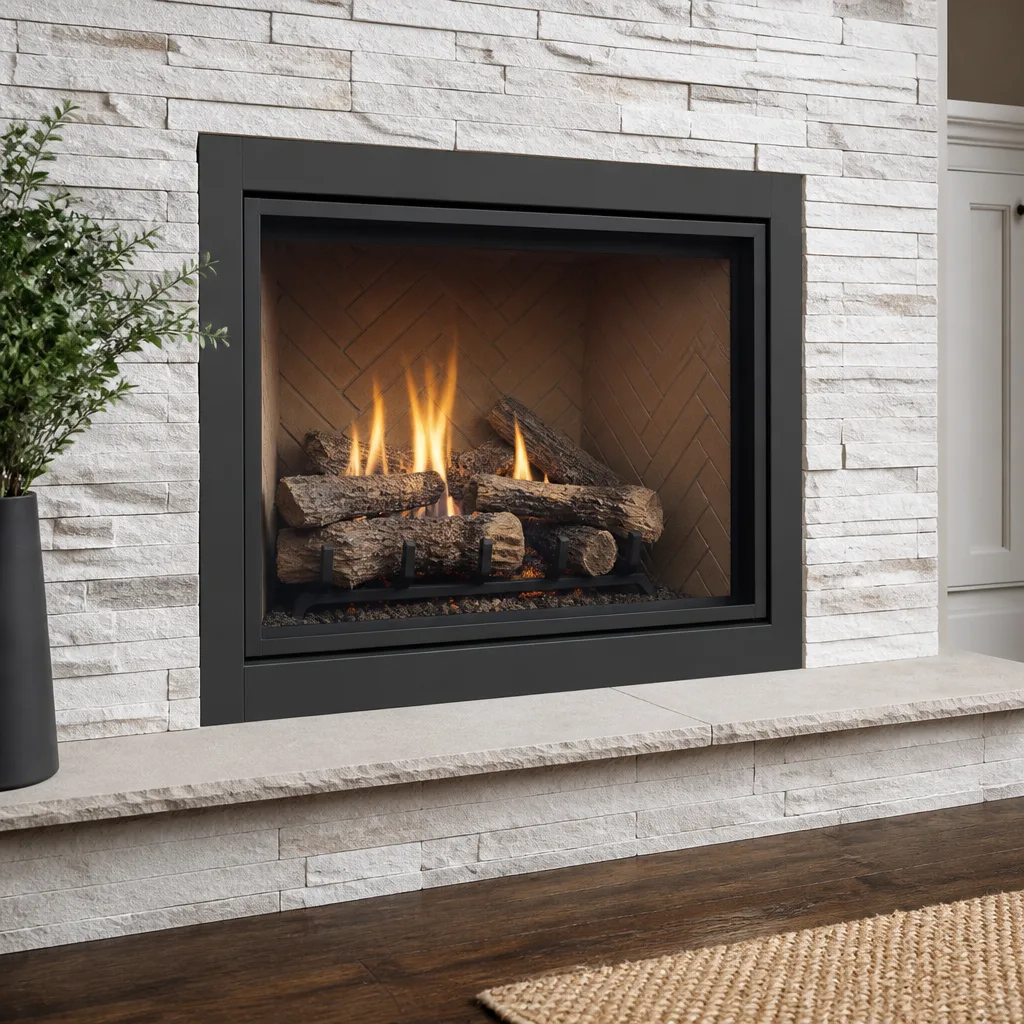
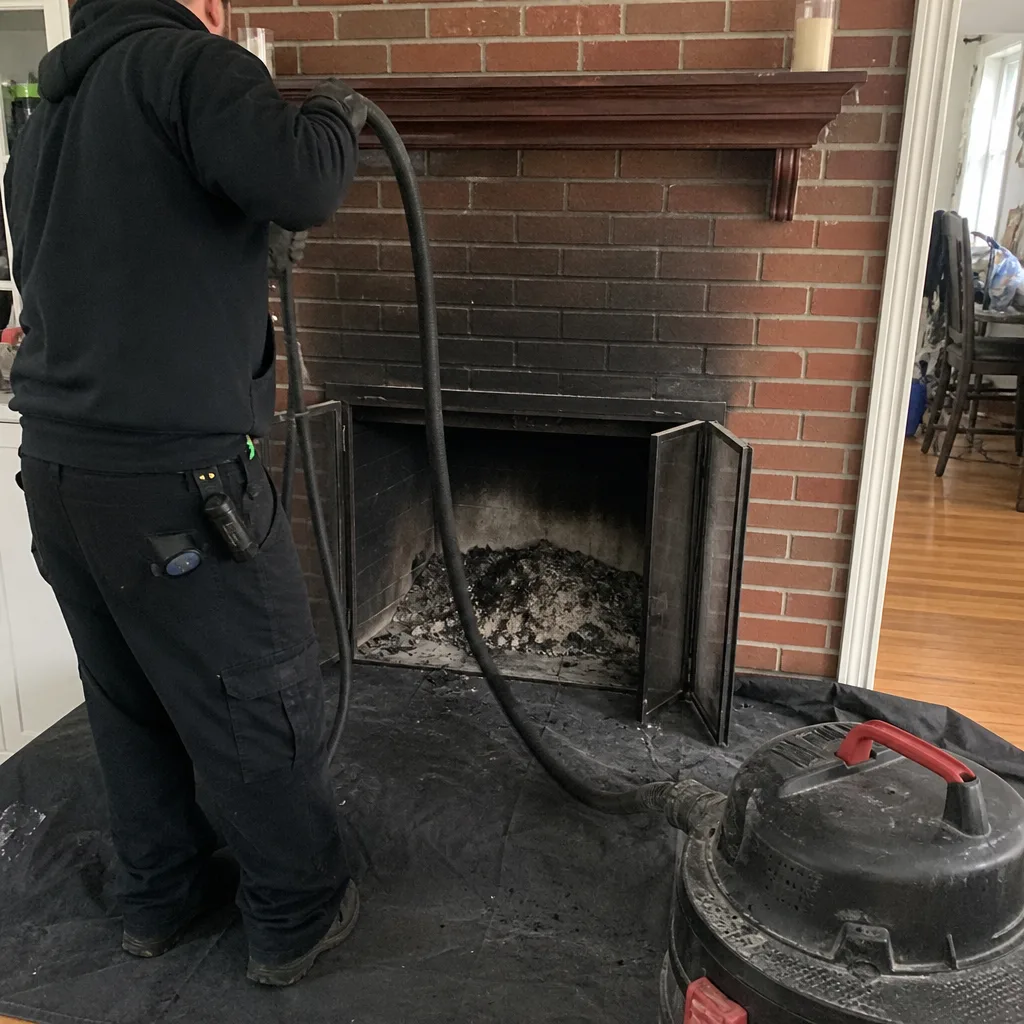 Before
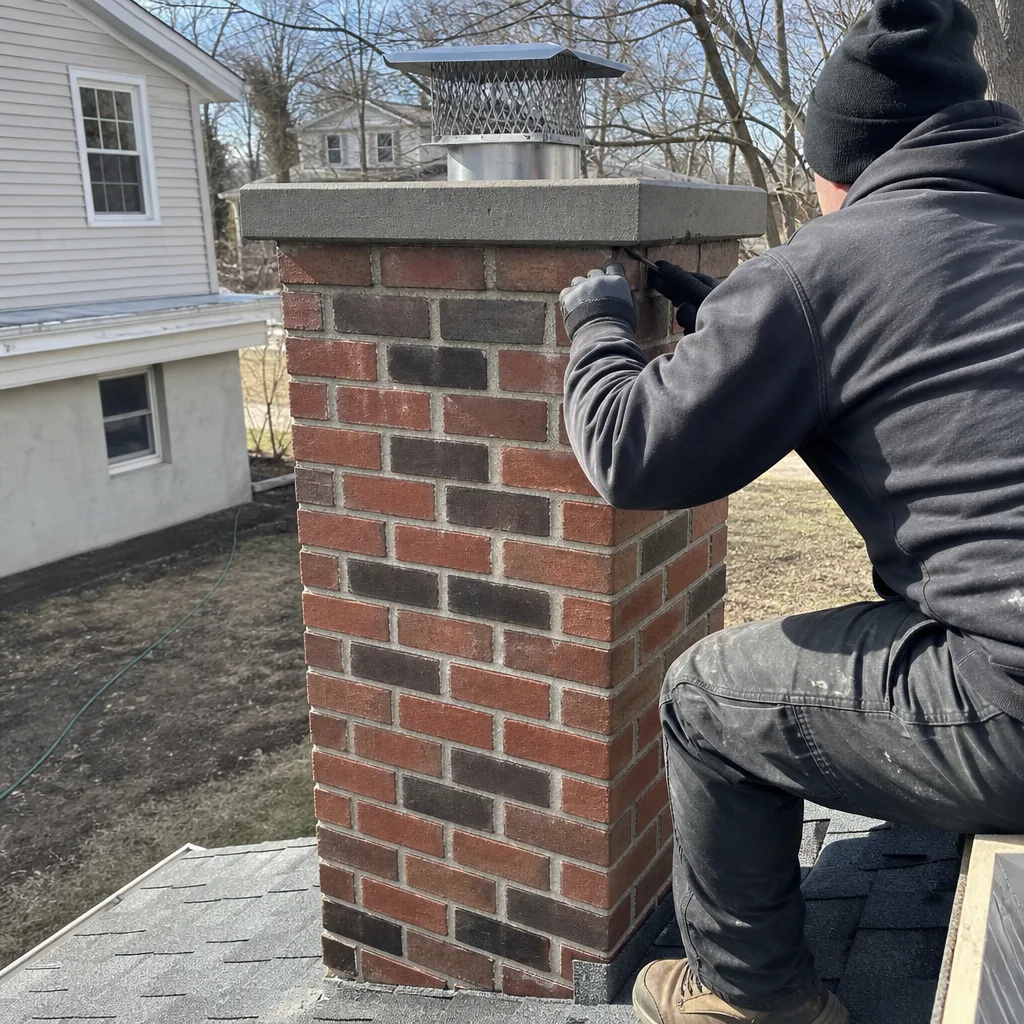 After
After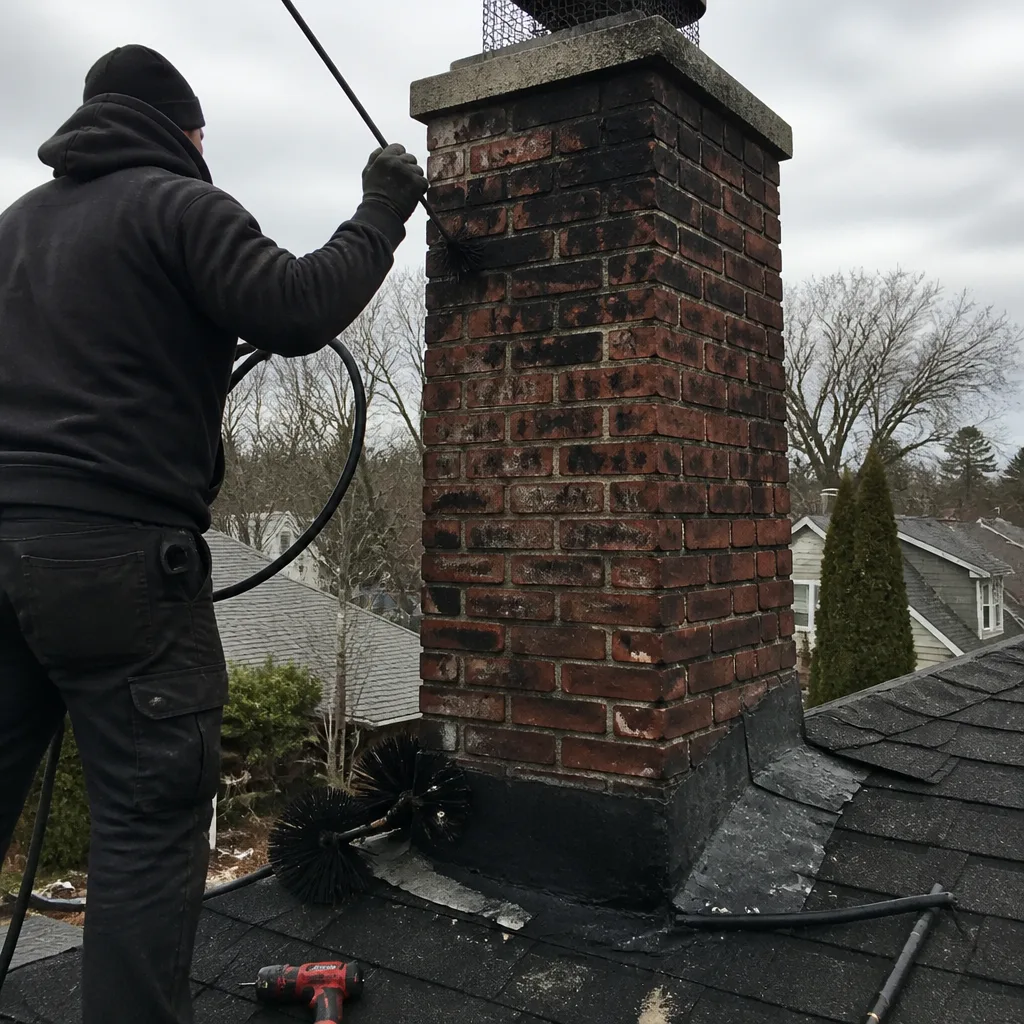 Before
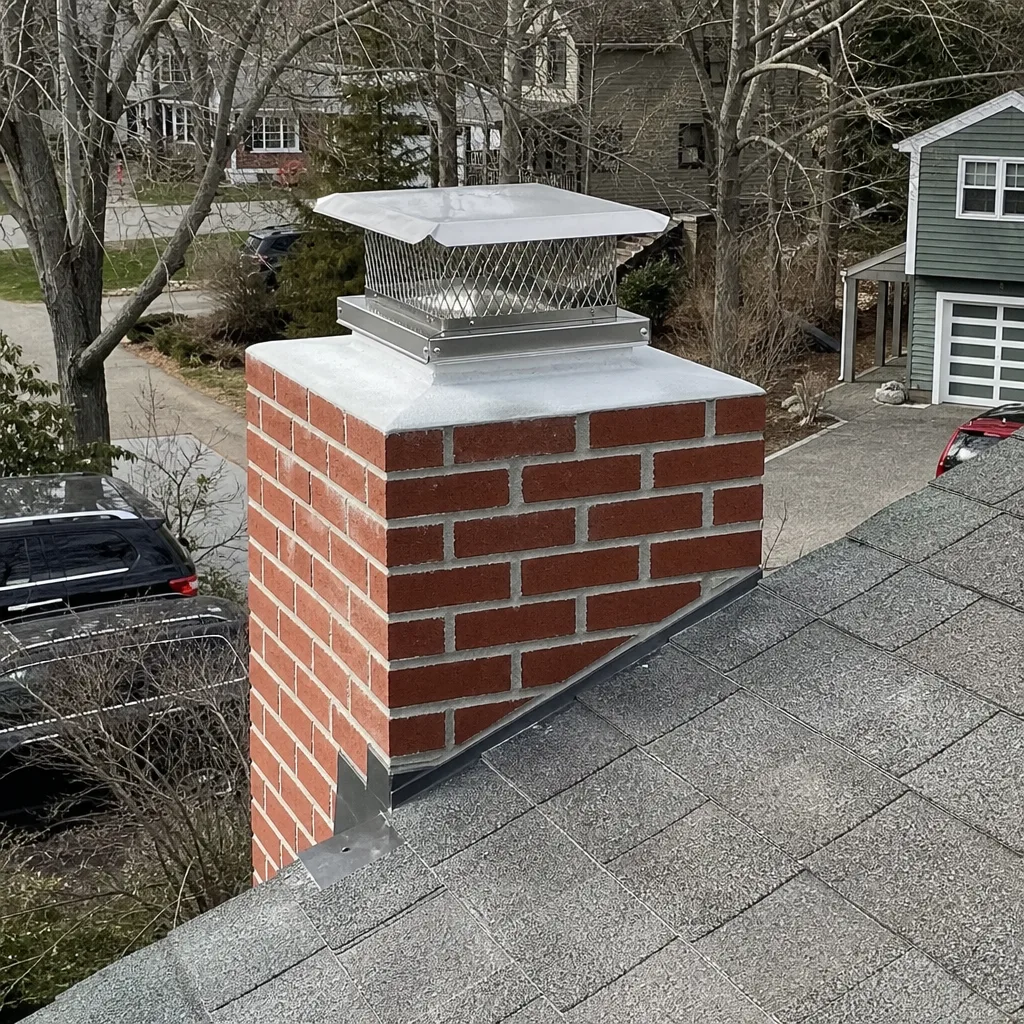 After
After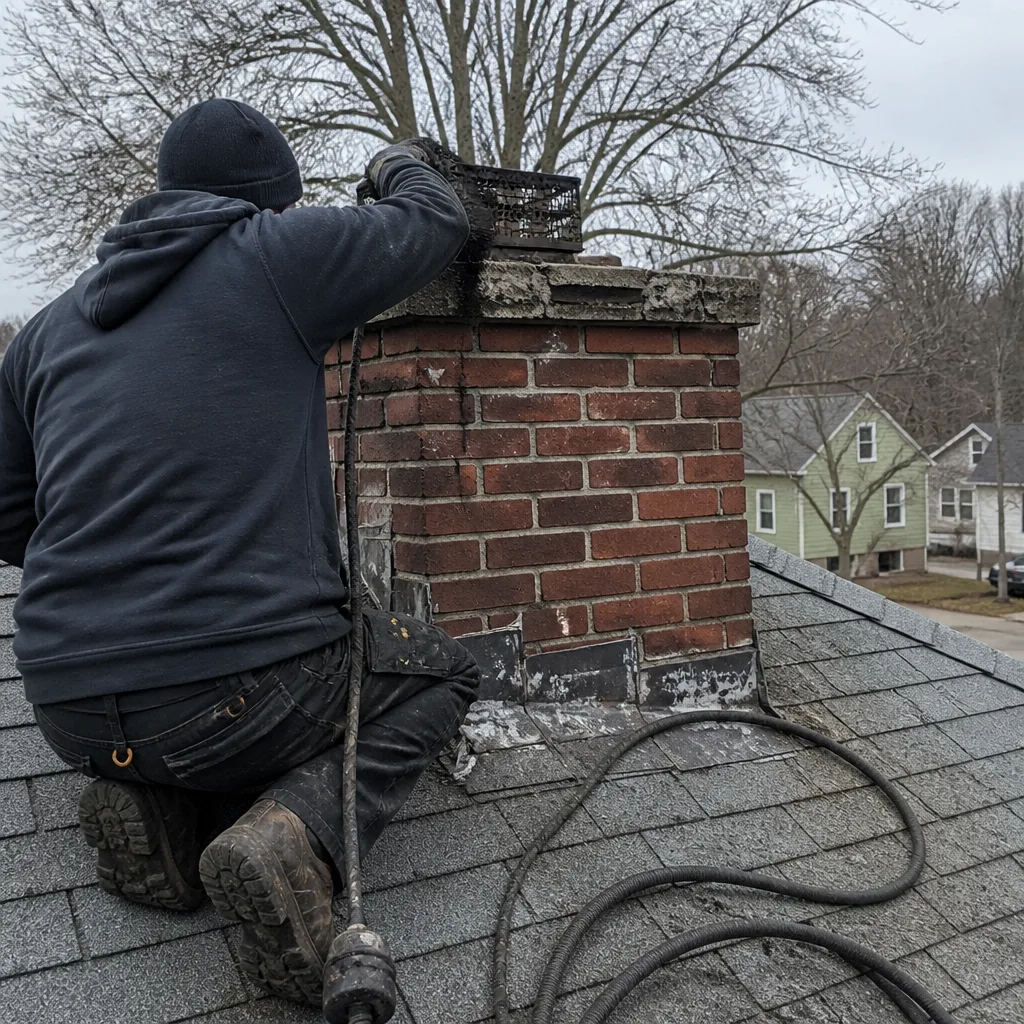 Before
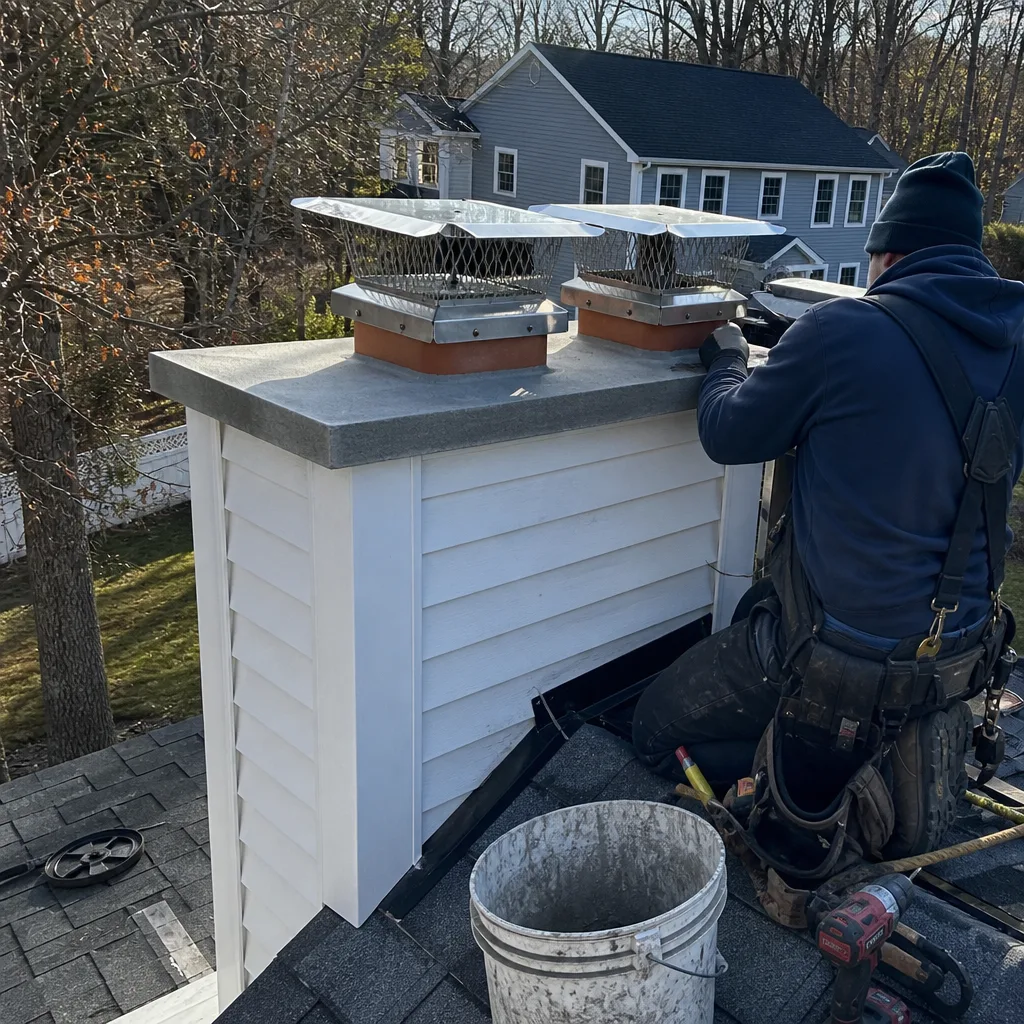 After
AfterChimney Cleaning Warning Signs: A Wakefield Homeowner’s Reference Guide
A chimney that smells like a campfire in August isn’t a quaint seasonal quirk - it’s creosote off-gassing through a gap that will funnel smoke the same direction when you light a fire in October. The smell is the warning; most people call it atmosphere. After 42 years of sweeping chimneys across Wakefield and the North Shore, we’ve learned that serious chimney problems rarely announce themselves with drama. They accumulate in small, observable signals that a trained eye catches early and an untrained eye explains away. This guide - alongside our Complete Guide to Chimney Cleaning in Wakefield - teaches homeowners to read those signals before they become four-figure repairs.
Quick Answer
The seven warning signs that your chimney needs professional attention are: persistent creosote odor, smoke that doesn’t draft properly, weak or reversed draft pull, a sticky or resistant damper, firebox staining or white residue, white crystalline deposits (efflorescence) on exterior brick, and crumbling mortar at the roofline. Most Wakefield chimneys built before 1990 show at least two of these by age 35. Catching them early means a standard sweep; ignoring them often means liner replacement or partial rebuild.
Table of Contents
- The Smell Test: Distinguishing Normal from Warning
- Smoke Behavior: What Your Fire Is Trying to Tell You
- Draft Problems as Diagnostic Tools
- Damper Resistance and Firebox Staining
- Exterior Signs: Efflorescence and Mortar Damage
- Building a Year-Over-Year Photo Log
- Common Mistakes to Avoid
- When to Call a Professional
- Frequently Asked Questions
The Smell Test: Distinguishing Normal from Warning
Every chimney smells faintly of ash and old fire. That’s normal, especially in Wakefield’s humid July and August when warm, moist air settles into flues and activates residual soot. The distinction matters because one smell means close the glass doors and wait for autumn; the other means call a sweep before you burn again.
Normal chimney smell is faint, dry, and location-specific. You notice it when you stand directly in front of the fireplace on a sticky day. It dissipates when you step away or run a ceiling fan. It’s the smell of last season’s wood, not this season’s problem.
Active creosote odor is sharper, more pungent, and chemically distinct - closer to asphalt or tar than campfire. It penetrates rooms. It wakes you at 3 a.m. in bedrooms nowhere near the hearth. It means creosote deposits are thick enough to off-gas actively, and the chimney’s draft is compromised enough to let those gases travel backward into living spaces rather than up and out.
In Wakefield’s older neighborhoods - Montrose, Greenwood, the homes near Lake Quannapowitt built in the 1920s through 1950s - we see this pattern repeatedly. These houses have masonry chimneys with original flue liners, often unlined terra cotta that has developed hairline cracks from decades of freeze-thaw cycling. The cracks don’t leak water dramatically; they leak draft. Warm interior air escapes through cracks, cool humid air enters, and creosote that should have exited instead condenses on cooler liner surfaces. The smell is the proof.
Moisture intrusion has its own signature: musty, sometimes metallic, occasionally carrying a whiff of the attic or the wall cavity behind the chimney. If you smell mildew near the hearth after heavy rain, water is entering through a compromised crown, failed flashing, or spalled brick above the roofline. Water and creosote together accelerate deterioration exponentially. We’ve pulled liners in Wakefield homes where the terra cotta had degraded to sandy rubble because this combination went unaddressed for three seasons.
Our recommendation: note the smell’s character, location, and timing in a simple log. “August 14, bedroom 2, 6 a.m., tar smell strong” tells a sweep more than “chimney smells sometimes.”
Smoke Behavior: What Your Fire Is Trying to Tell You
A properly functioning chimney draws smoke upward through the flue faster than the fire produces it. When smoke lingers, escapes into the room, or stains the fireplace face, the chimney is reporting specific conditions that a homeowner can learn to read.
Smoke that fills the room on lighting typically indicates a cold flue or blocked airflow. In Wakefield’s older homes with exterior chimneys on north-facing walls, the flue temperature can drop below the dew point even in October. The initial smoke, warmer and lighter than the cold column of air above it, fails to establish upward momentum. The solution is not more paper; it’s warming the flue with a small, hot source held at the damper level for 90 seconds before building the main fire. If this doesn’t solve it, the flue may be partially obstructed by nest debris, collapsed liner sections, or significant creosote buildup.
Smoke that clears slowly after the fire is established suggests insufficient flue capacity, often from liner deterioration that has narrowed the effective passage. A 9×13 terra cotta liner with cracked, spalled interior surfaces may functionally measure 7×10 or worse. The fire doesn’t change; the chimney’s ability to handle its output does.
Smoke staining on the fireplace face or mantel is physical evidence of repeated smoke escape. Look for gray-black deposits at the top of the firebox opening, on decorative brickwork, or on the underside of the mantel shelf. These stains accumulate over seasons; catching them early means addressing a draft issue, while catching them late often means cleaning and repainting surrounding surfaces plus repairing the underlying cause.
Wakefield’s prevailing winds from the northwest complicate draft behavior in homes on the west side of hills or in dense tree cover. We’ve documented cases where a chimney performed adequately for twenty years until a neighbor’s mature oak shed a major limb, altering wind patterns at roof level. The chimney didn’t change; its environment did. This is why we assess chimney performance in context, not in isolation.
Chimney Cleaning & Sweep in Wakefield addresses smoke behavior systematically - inspection first, then cleaning, then documented testing of draft performance under real conditions.
Draft Problems as Diagnostic Tools
Draft is the pressure difference that moves air up the flue. Homeowners experience it as the pull they feel when opening the damper, the speed of smoke clearance, or the occasional puff of air that blows out from the fireplace instead of drawing in. These three phenomena - back-puffing, slow smoke clearing, and cold downdrafts - each diagnose different conditions.
Back-puffing is the sudden expulsion of smoke or air from the fireplace, typically when no fire is burning or when a fire is dying. It feels like a small exhalation from the chimney. The cause is almost always a pressure imbalance: the house has become negatively pressurized relative to outdoors, and the chimney is the path of least resistance for air to equalize. In Wakefield’s tighter, energy-retrofitted homes - common in the Montrose area where owners have invested in air sealing and insulation - this has become more frequent. The solution isn’t chimney repair; it’s combustion air supply or controlled ventilation. But back-puffing carries creosote particles and odors with it, so the symptom often sends homeowners looking for chimney problems that don’t exist. A proper diagnosis saves the cost of unnecessary work.
Slow smoke clearing with an established fire points to liner degradation or flue obstruction. We measure this practically: a healthy chimney clears visible smoke from the firebox within 30 seconds of damper opening. If smoke hangs for two minutes or requires door-opening to dissipate, the flue is not performing. In our Wakefield inspections using Hearthstone Chimney Co. home protocols, we document this with timed observation and video, so homeowners see what we see.
Cold downdrafts are persistent columns of cool air descending the flue, detectable by hand at the damper even when no fire is lit. They indicate that the chimney top is not effectively preventing reverse airflow. Causes include missing or damaged chimney caps, improperly designed caps that create eddy currents, or - in taller chimneys - the stack effect working in reverse during temperature inversions. Wakefield’s winter temperature swings, with single-digit nights following 40-degree days, exacerbate this. A chimney cap from a quality manufacturer like Gelco or Olympia Chimney, properly sized and installed, typically resolves it.
The diagnostic value of draft behavior is that it reveals problems invisible from below. We’ve identified collapsed clay flue liners, detached stainless steel relining, and significant masonry deterioration solely through draft testing that prompted camera inspection. The draft is the chimney’s pulse; learning to feel it is the first step toward maintaining it.
Damper Resistance and Firebox Staining
The damper is the most mechanically abused component in any fireplace system. It opens and closes dozens of times per season, operates in temperature swings from room temperature to 600 degrees, and collects creosote on its edges that hardens into a glue-like deposit. When a damper becomes sticky, noisy, or resistant, the cause is rarely the damper mechanism itself.
Sticky or resistant damper operation most often indicates creosote buildup on the damper blade and frame, or rust where moisture has entered and combined with acidic flue gases. In Wakefield’s coastal-influenced climate - salt air reaches us less directly than Gloucester or Revere, but enough to accelerate metal corrosion in chimneys with marginal caps - we see rusted damper frames in homes as little as 15 years old. The resistance is progressive. Season one, the damper needs a firmer push. Season three, it requires two hands. Season five, it won’t seal fully closed or open fully wide, meaning you’re losing heated air up the flue or restricting fire airflow even when “open.”
Firebox staining appears in distinct patterns that reveal their causes. White or gray powdery deposits on the rear wall indicate efflorescence from moisture migration through the masonry - the same process that produces exterior white staining, discussed below. Black streaking from the firebox top corners running downward suggests smoke escape at the lintel area, often from a too-small throat or damaged smoke chamber. Rust-colored staining at the firebox base means water is entering from above and carrying dissolved minerals or rust from the damper assembly.
We document firebox conditions with photographs during every Level-2 inspection. Homeowners receive these images with annotations explaining what each stain pattern indicates. This matters for insurance purposes - a documented baseline before a chimney fire or water damage claim establishes pre-existing condition - and for maintenance planning. Some staining indicates active, urgent problems. Other staining is cosmetic, the accumulated character of decades of use, and can be addressed during routine maintenance without urgency.
The firebox is where you see the chimney’s health most directly. Spending two minutes with a flashlight, examining the walls and floor for new or changing stains, provides more actionable information than most homeowners realize.
Exterior Signs: Efflorescence and Mortar Damage
The chimney above the roofline operates in the harshest conditions of any house component: full sun exposure, wind-driven rain, freeze-thaw cycling, and - in Wakefield’s case - the occasional ice dam backup that channels roof runoff directly against chimney flashing. Two exterior signs, visible from ground level with binoculars or a basic zoom camera, reveal internal conditions before water appears inside.
Efflorescence is the white, crystalline deposit that appears on brick surfaces. It’s not mold, not paint failure, and not merely cosmetic. Chemically, efflorescence is soluble salt - primarily calcium sulfate and potassium sulfate - carried to the brick surface by water migrating through the masonry matrix. The water evaporates; the salts crystallize. The presence of efflorescence proves that water is moving through the masonry, dissolving minerals, and reaching the surface.
Here’s what competitors miss: power-washing efflorescence without first addressing water entry and applying a breathable masonry sealer accelerates damage. The pressure drives water deeper into micro-cracks. The removal of surface salt exposes fresh masonry to accelerated freeze-thaw spalling. Within two seasons, the brick faces begin to flake and pop. We’ve rebuilt chimney crowns in Wakefield neighborhoods where well-meaning homeowners or inexperienced contractors power-washed “the white stuff” and transformed a manageable moisture issue into structural spalling requiring partial rebuild.
Proper treatment: identify and repair the water source (typically crown cracks, flashing gaps, or porous brick), allow thorough drying, apply a silane-siloxane breathable sealer, then - if aesthetic removal is desired - use gentle chemical cleaning appropriate to the brick type. We specify materials from Copperfield and Famco for these repairs, matched to the specific masonry composition.
Crumbling mortar at the roofline is visible as gaps, sandy residue, or recessed joints between bricks. Mortar deteriorates from the top down because that’s where water concentration is highest and where freeze-thaw cycling is most extreme. In Wakefield, where winter temperatures fluctuate across the freezing point dozens of times per season, this damage progresses faster than in more consistently cold climates. A quarter-inch mortar joint recedes to half-inch, then the brick above loses lateral support and begins to shift. We’ve seen chimney crowns tilted two degrees off level from mortar loss that went unaddressed for three years.
The critical inspection points are: the crown-to-brick interface, the four corners of the chimney above the roofline, and any corbelled or stepped-out sections where water collects. These can be examined safely from the ground with a camera’s zoom function, or from a ladder at gutter level if you’re comfortable with that height. Document what you see; compare year to year. The rate of change matters more than the absolute condition. A chimney with stable minor mortar loss may be fine for years. One with accelerating deterioration needs prompt attention.
Chimney Repair in Wakefield covers the full range of exterior masonry restoration, from tuckpointing to crown rebuild to complete chimney reconstruction when necessary.
Building a Year-Over-Year Photo Log
The most powerful diagnostic tool a homeowner can maintain costs nothing and requires no special equipment: a dated photograph series taken from consistent vantage points. This practice transforms vague memory (“I think that crack was smaller last year”) into documented evidence that guides maintenance decisions and protects insurance interests.
Here’s the method we teach Wakefield homeowners:
- Establish four standard shots. (1) Full chimney from the ground, showing roofline to cap. (2) Close-up of the crown and cap from the best ground angle available. (3) Firebox interior with flashlight illumination, showing rear wall and floor. (4) Damper mechanism with damper fully open, showing blade condition and frame.
- Take these photographs on the same date annually. We recommend late September, before burning season begins, when summer humidity has revealed any moisture issues and before autumn lighting makes firebox photography difficult. Add an additional set in early April if you’ve had an unusual winter or noticed any changes during the burning season.
- Store with dated filenames and brief notes. “2024-09-15-chimney-exterior.jpg” plus a text note: “New hairline crack visible on north face, 6 inches below cap. Efflorescence unchanged from 2023.”
- Compare sequentially, not to memory. Open 2023 and 2024 side by side. Changes that seemed dramatic in person often prove minimal; subtle shifts invisible to casual observation become obvious.
- Share with your sweep before the appointment. Email the current year’s set when booking. A technician who knows what to look for arrives prepared, and the appointment focuses on verification rather than discovery.
This practice has direct financial value. We’ve had Wakefield homeowners present photo logs that documented crown crack progression over four years, establishing that a subsequent water damage claim involved pre-existing conditions the insurer initially disputed. We’ve had others use year-over-year comparison to confirm that a repair successfully arrested deterioration, validating the investment. And we’ve had homeowners catch early warning signs - a new efflorescence pattern, a shifting brick - that prompted inspection before the condition became emergent.
The photo log also makes our job faster and more precise. When a homeowner says “the crack was here last year and it’s grown,” we know exactly where to focus our camera inspection and how to interpret what we find. Time saved in diagnosis is quality invested in solution.
Common Mistakes to Avoid
- Assuming a chimney that “looks fine” is fine. Most dangerous chimney conditions are invisible from the living room. The liner can be cracked, the flue partially blocked, and the crown actively leaking while the fireplace face shows nothing wrong. Annual inspection, not casual observation, is the standard.
- Power-washing exterior efflorescence without sealing first. As detailed above, this drives water into the masonry and accelerates spalling. The white disappears; the damage accelerates.
- Burning green or unseasoned wood to “save money.” In Wakefield’s tree-rich neighborhoods, homeowners often burn storm-fallen oak or maple within months of cutting. Wood with moisture content above 25% produces cool, smoky fires that deposit creosote at 3-4 times the rate of properly seasoned fuel. The savings on wood become costs in sweeping frequency and liner longevity.
- Ignoring “just a little” smoke in the room. Occasional smoke escape is not normal; it’s a chimney reporting compromised draft. Each episode deposits creosote on surfaces that weren’t designed for it and exposes occupants to particulate matter. Document the frequency; if it’s more than once per season, investigate.
- Installing a chimney cap from a big-box store without sizing verification. Improperly sized caps create turbulent airflow that worsens downdraft, or they install with inadequate clearance that traps moisture. We specify caps from Olympia Chimney and Gelco with documented sizing protocols for each flue configuration.
- Waiting for “the fall rush” to schedule maintenance. Wakefield’s chimney sweeps are fully booked from mid-October through Thanksgiving. Scheduling in August or September means flexible appointment times, thorough attention without time pressure, and any needed repairs completed before the first fire.
- Accepting a verbal “looks good” without documentation. Every inspection should produce photographs and a written condition report. If a sweep won’t provide these, you’re paying for opinion, not professional assessment.
When to Call a Professional
When you’re ready to hire a chimney cleaning contractor in Wakefield, call a certified professional if you observe any of the following: persistent creosote odor that penetrates living spaces; smoke that repeatedly enters the room despite proper fire-building technique; a damper that has become difficult to operate or fails to seal; new or expanding exterior cracks, efflorescence, or mortar loss; or any water staining inside the firebox or on adjacent walls. These conditions do not resolve themselves; they progress from manageable to expensive on a timeline measured in seasons, not years.
Hearthstone Chimney Co. offers free estimates in Wakefield - call (857) 364-8219. Our Level-2 camera inspections include photographs you can see and a plain-English verdict you can act on. The 90-Day Done Right Promise covers every job in writing: if it’s not right, we make it right, with no paperwork and no arguing. Calls are answered by a live person 24 hours a day, 7 days a week. Background-checked, uniformed technicians complete most jobs in a single visit, with no-hassle upfront pricing so the number on the estimate is the number on the invoice.
Fireplace Services in Wakefield extends beyond sweeping to full hearth restoration, insert installation, and combustion efficiency optimization for homeowners who intend to stay in their homes for decades.
Frequently Asked Questions
A standard Level-1 chimney sweep and inspection in Wakefield typically ranges from $199 to $289, depending on accessibility, appliance type, and whether the flue has been maintained on schedule or requires additional cleaning cycles. Level-2 camera inspections, recommended when buying a home or after a chimney fire or significant weather event, range from $349 to $449 and include a written report with photographs. Call (857) 364-8219 for an exact quote - estimates are free.
The National Fire Protection Association Standard 211 recommends annual inspection for all chimney systems, with cleaning frequency determined by use and fuel type. For Wakefield homeowners burning cordwood as a primary heat source, that typically means annual sweeping. Occasional decorative fires may extend to every two years if inspection confirms minimal creosote accumulation. The specific interval depends on wood moisture content, burning practices, and chimney configuration - not on calendar assumptions.
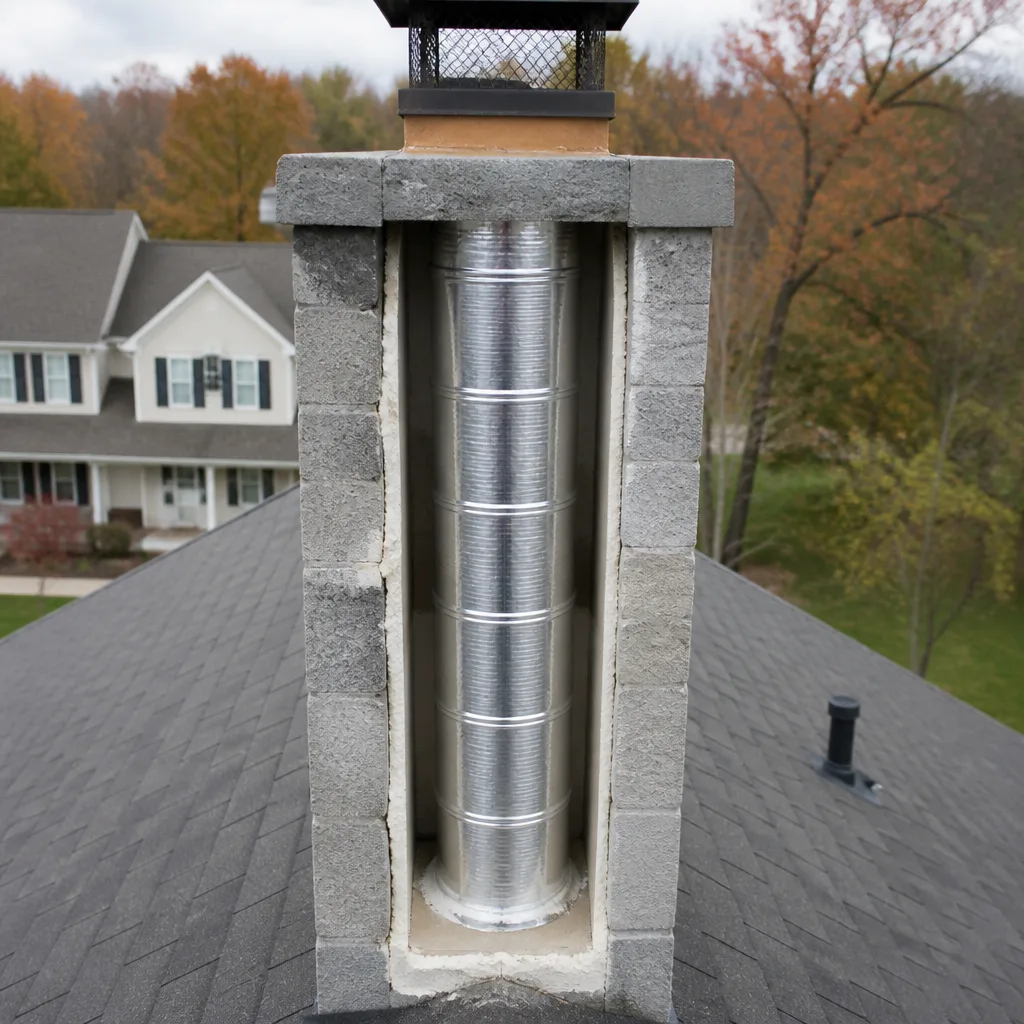
An intact clay flue liner in good condition performs adequately for open wood-burning fireplaces. Replacement becomes necessary when inspection reveals cracks, spalling, gaps between flue sections, or glazing that cannot be removed by standard sweeping methods. We never recommend liner replacement without camera documentation that you can see yourself. In some cases, a clay flue with minor, stable cracking can continue in service with enhanced monitoring; in others, a stainless steel liner from DuraFlex or HeatShield application is the appropriate solution. The decision follows evidence, not sales pressure.
Skipped maintenance allows creosote accumulation to progress from removable soot to glazed, hardened deposits that require powered removal - at roughly triple the cost of standard sweeping. It allows minor crown cracks to become water pathways that degrade mortar and spall brick. It allows liner deterioration to progress to the point where combustion gases leak into wall cavities. And it increases fire risk: creosote ignites at approximately 451 degrees Fahrenheit, and a well-maintained flue contains minimal fuel for such ignition. The cumulative cost of deferred maintenance typically exceeds proactive care by a factor of five to ten within a decade.
Summer humidity and temperature differentials activate odor-producing compounds in chimney deposits. Warm, moist air enters the flue, interacts with creosote and soot, and the resulting gases descend into air-conditioned living spaces because the house’s stack effect is reversed - cool air sinks, warm air rises, and the chimney becomes an entry path rather than an exit. A proper chimney cap, adequate damper seal, and clean flue minimize this. Persistent summer odor despite these measures indicates significant creosote buildup or active moisture intrusion requiring professional attention.
Homeowners can and should perform regular visual checks from ground level and firebox examination as described in this guide. However, a complete assessment requires roof-level examination of the crown, cap, and flashing, plus internal camera inspection of the flue liner - work that involves fall risk, specialized equipment, and trained interpretation. We encourage homeowner vigilance as a complement to, not replacement for, professional inspection conducted to NFPA 211 standards.
The Bottom Line
Chimney warning signs speak quietly and consistently to homeowners who learn their language. The smell of active creosote, the smoke that lingers, the damper that resists, the white bloom on brick - these are not mysteries requiring specialist interpretation. They are observable, documentable, and actionable signals that a chimney needs attention before small conditions become large expenditures. Wakefield’s climate and housing stock present specific patterns that experienced local sweeps recognize and address. The homeowner’s role is to notice, to document, and to act before the warning becomes the emergency - and for more guides & resources on keeping your chimney safe, explore our blog. Done right - and we stand behind it - chimney maintenance is predictable, affordable, and complete in a single visit. A square deal: no surprises on the bill, photos you can see, a plain-English verdict, and a company that plans to be in town thirty years from now to stand behind today’s work.
Written by Russell Haines, Owner at Hearthstone Chimney Co., serving Wakefield since 2014.